Showing posts with label survival. Show all posts

Wednesday, March 21, 2018

Reflections: Quiet

The Myers & Briggs Personality Test (MBTI metric) classified me as 99% introverted 10 years ago. I agreed with it. Several wondered how I managed to escape the elusive 1% in the metric. This was not good news to people at work and family. I was always advised to change, to "better" myself. It was non-negotiable. Such an introverted personality (no matter what other traits they possess) is essentially perceived as a liability to oneself and to people around them. 

And so, I tried to change. I remember a conversation with my dearest friend, a fellow introvert who figured out the key strategies for self-adjustment. She would walk me through potential social scenarios and brainstorm ways in which I could participate in conversations, things I could say, how I could voice the statements etc. etc. Feels pathetic, doesn't it? But I needed it. I always did well 1-1, but in a group, I wanted to disappear and remain invisible. Why add to all the noise? But, that's how the world works - visibility and noise matter a lot.

Fast forward to the present. Increasingly over the past couple of years, people have been calling me "extroverted" and "bubbly" - terms that have never been associated with me. When I correct them, they vehemently disagree (much to my secret pleasure), my family senses "a change" in me, some friends were confused by my apparent dual personality, some old friends were pleasantly shocked, some even took offense when I wanted to shut out and be myself when I'd been "bubbly" just an hour ago, and the one person who has seen and lived through this journey with me finally commented - "you have brought out the better version of yourself".

So, the researcher in me, wanted evidence I could understand more objectively. I retook the MBTI test, and now I am 61% introverted. Still an introvert, but close enough to straddle and switch between personalities when needed. I recognize it as a survival necessity.

In my personal journey of self-improvement and awareness, this is significant for me. It took 10 years of painful reflection and constant calibrations, walking the fine line between being genuine and mustering some "fake" enthusiasm in light of the bigger goal, negotiations with family and friends over the frequency of socializations vs. solitude, and most importantly, recognizing and accepting the core of who I am, the things about me that will never change and that I do not want to change. There are still days when I hear people "pleasantly" cursing my introversion, telling me that I "don't seem like I even exist" (the existential questions that such statements trigger!), and there are days when I want to curl up and give up. 

And then I read this book that was recommended to me by several. I wish I had read it sooner. I wish I could just hand this over to people who refer to introverts with a negative inflection, who perpetuate the belief that extroverts are the "right type" of personality, the more lovable, "normal" people. 

Well researched and written with clarity, insight, deep empathy and understanding (for the author is an introvert herself), this is a comprehensive book for anyone curious about the personality differences and misconceptions surrounding introverts and extroverts. Every type of personality has intrinsic strengths and values. They are suited to specific types of jobs or environments, but are in no ways incapable of going beyond their sphere of "suitability". It requires some flexing of their personality "muscles" to fake and adopt some traits/skills to get to where they want to be. Many times, it is their uniqueness and how they apply their skills uniquely that matters. If networking is important to your career, you need to suck it up and do it. How often you do it, how you go about preparing for it, etc. is where you strategize, given your personality type. I appreciate this pragmatic and practical approach. Brimming with research from multiple cultures, this book is full of interesting case studies of famous and ordinary people, and their strategies. I found the book extremely useful. And those who are in relationships with introverts (professional or personal) will find this useful as well. 

It is terrible to feel like an anomaly, to feel flawed and guilty for just being who you are. Even now, when I am complimented for having "improved" myself for the better, I feel some resentment and frustration. But, I remind myself that there will always be two versions of yourself - one that is shaped by how you see yourself (your self-awareness), and the second is how others perceive you. You have no control over the latter, and for the most part, that's just the superficial aspect of you. How others perceive you matters in a practical sense to get through day-to-day things that build equity over time. Do not let it cloud your own self-awareness as much as possible. All the changes, self-improvements, and calibrations you make within yourself need not be (and will not be) apparent to others. In that sense, validation and acceptance needs to come from within you. Easier said than done, but that's the journey we all take. 

PS: Another book on Introversion I recommend is this one I read almost 8 years back (it is a lighter and quicker read).

Wednesday, November 13, 2013

Reflections: Corelli's Mandolin

I have not watched the movie adaptation of this book, so I don’t have any reference points.

Stories of War that deal with both human suffering and enduring love strike that perfect formula to churn a human heart. Love and tragedy go so well together in stories.

This is the story surrounding the wars that erupted between Greece and Italy during the time of the second world war. This is the story of Pelagia, a Greek woman who lives through the many wars amidst love and loss. The harsh realities of war teach her to value the most essential elements of life and understand the meaning and depth of love. There are several interesting and strong characters in the book. Captain Corelli is one of them. The Italian Captain takes over Pelagia’s island, but has a rare mix of personality traits - kindness and compassion coupled with wit and bravery. He hates war, but is attached to his duty. So he does his best to minimize harm and create friendship and well-being between the Italians and Greek (at least those on the island). Pelagia and the Captain fall in love and patiently hope for the war to end while nurturing ideas of their future together. And then the Germans invade, and everything is washed away.

This is a simple story. But a powerful one. It’s mostly about the ravages of war, and the coming of age of an innocent and intelligent woman. Pelagia is molded and hardened by the horrors around her, and her immense strength provides a beacon of hope to the men in her life. During times of excruciating difficulties and atrocities, the human psyche changes in one of three ways - 1) it is deeply, irrevocably wounded and scarred, withdrawing into a reclusive shell, 2) it manages to rise to a positive place of strength, compassion, and constructive action despite the scars or 3) it sinks into an abyss of self-destructive cruelty and negativity due to the festering wounds. The author explores all of these changes in the human psyche through his extremely well developed characters. He fleshes them out as sympathetic characters, each driven to their ways due to the circumstances of war and survival.

In parallel to the above themes, the story explores the nature of different types of love: the one that is dominated by lust, the one that endures after the fire of lust has burned out, the one that is born from loyalty and admiration, the one that is shared between a parent and child, the one that slowly develops between wounded souls that heal each other, the one that is at the heart of friendships etc. At the end of all the destruction and tragedy, the one essential tonic that keeps us humans going is love. It sounds corny when I write it, but the book beautifully brings this out.

There is also a lot of history in this book. It is primarily a historical document. The characters are just used to color the history more vividly. So, the story moves slow. However, the excellent writing makes the reading experience worthwhile. Despite the heavy theme on war, I appreciated the intelligent humour and wit that laces through the story and the characters. I laughed out loud at scenes, smiled through many passages, and loved Pelagia’s dad and the Captain. In many ways, Pelagia’s dad reminded me of my own, and that made it all the more endearing. I was emotionally invested in the characters and lived through their terrors and hopes. I felt Pelagia’s pain and was moved to tears.

With such great things to gush, I did find one thing unsatisfactory - it was the way the story ended. The last hundred pages seemed rushed, and the ending was inconsistent with the raw realism of the rest of the story. With so much beauty and insight that accompanied the rest of the story, I don’t understand why the author ended the story in an over-the-top romantic manner and with the Captain behaving in the most infuriating manner possible. The ending felt flat and deflated. I guess I am too old for romance of this kind.

That aside, this is a book heavy with thoughtful and intelligent commentary on war, survival, and love. The writing reminded me of a serious version of Wodehouse, which has biased me, no doubt.

Saturday, July 14, 2012

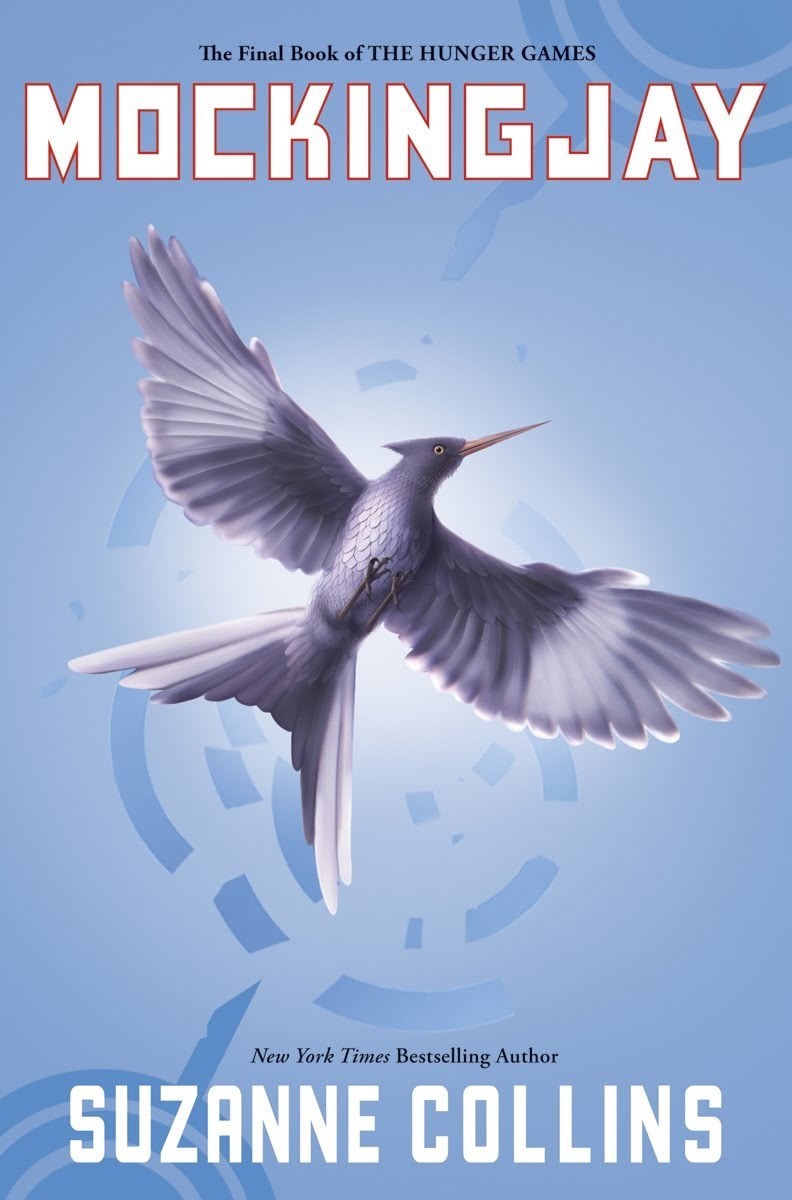
Reflections: Mockingjay

This is the final book in The Hunger Games trilogy. I really liked the final book. The first and second books were mostly suspenseful and disturbing, but the third one really delivered the characters and storyline. The rebellion is in full-swing. The rebels congregate and strengthen the unit in District 13 and are ready to overthrow the Capitol. Katniss represents the symbol of the rebellion - the Mockingjay. Katniss supports the rebellion in principle, but she can’t reconcile the death and ravage it is bringing about. Is it worth any cause to sacrifice the lives of the innocent? The question harangues her and consumes her, but she resolves to kill President Snow, if that’s the last thing she does. Can she save Peeta from the tortuous clutches of the Capitol? Can human-beings ever be able to sustain life after the horrific war? Can she ever lead a normal life after all this? These are the questions that plague the reader as much as Katniss as they race through the book.

Due to all the introspection that the protagonist goes through, much of the heavier themes are suitably addressed in the final book. True, the themes have not been delved into their true, fathomless depths, but it’s a good exploration for a young-adults' book. The writing never came to the forefront of my reading experience until this book. The writing tackles the moral and ethical dilemmas of war, conflict, and revenge, in a manner that both teenagers and adults can feel the severity and weight of the issues. The climax is particularly well-written. Katniss’s growth is tragically and sensitively fleshed out, and real emotions of pain, despair, and agony scream across the pages. True, this book is also heartrendingly painful to read, but everything is conveyed much better than in its prequels. The brutality of the situations is tempered with a certain quality of philosophical irony, and balanced with a good measure of human goodness.

No doubt, this is yet another violent book. I went through similar nightmares as Katniss, just by reading the book. Katniss’s and Peeta’s psychological states were also realistically written.

The main thing the book misses on is the political shift (if any) that happens at the end. What happens to the political situation? What are the new credos? The political manifesto? Will there still be a Capitol and subordinate districts? How would they all operate? Etc.. It’s not clear if democracy is set. Not that it matters to Katniss at this juncture, but the book would have been more powerful if it had at least grazed these questions.

The book ends on the major note that it is important for people to always pay attention to the political scenarios and not remain selfishly complacent with their comfortable outward existence. Each of us plays a role in the political beliefs held by our community as a whole. It’s a nice message for teenagers to think beyond their bubble of entertainment and romance. Political responsibility is indeed important for all of us to cultivate, no matter our age or status.

I think the series works best as a whole, and not necessarily as individual books. Taken together, there is a surprising level of progress in writing, story-telling, and the characters with each book in the series. The entire series proved to be an interesting, if disturbing, read for me.

Friday, July 13, 2012

Reflections: Catching Fire

Catching fire is the second book in The Hunger Games trilogy. I originally wanted to write a combined post on all three books, but realized that I had different things to write about each book, so here are my thoughts on the second book.

I definitely preferred the second book to the first book, probably because the gravity of the premise had finally sunk into me, or perhaps it was because of the progression of events in this book. The plot in this book deals with the possibility of a rebellion against the Capitol. It shows that even the supposedly mindless people of the Capitol still retained some humanity to feel compassion, sorrow, and intolerance towards callous cruelty. It was also a little relieving that there wasn’t as much violence as in the first book. Again, I could predict what the Quarter Quell had in store for Katniss, but I didn’t expect Katniss to be raised to such a high pedestal by the helpless people of the districts. Seeds are sown and the fire of rebellion slowly spreads. The first half of the book sets the stage.

And of course, some shape is given to the romance-triangle that seems to be the formula of every successful teen book - two incredibly awesome, perfect young men hopelessly in love with a confused, headstrong young woman. In addition to all the devastation that the girl witnesses and goes through, she is subject to yet another painful consideration to sort out her emotions and feelings. An ironic tragedy mixed with fairytale romance. This is another ultimate teenage fantasy. It sometimes gets saccharine to repeatedly read of how self-effacing and immaculately noble the men are, and how imperfect and volatile Katniss is, but, it makes for good dreaming. After all, good romance manipulates everyone - even the people of the Capitol.

Katniss and Peeta find themselves in yet another round of The Hunger Games and are thrown into a monstrous arena. Not knowing whom to trust and whom not to, the pair tries to survive for each other, but little do they know that the Game Planner and others have a bigger agenda in mind. The book ends with a completely disorienting suspense, making the third book in the series extremely sought after.

There is a lot of character development in this book, and the writing is as gripping as the first book. Hope and suspense mix into each other, making the second one a thrilling prelude to the final book.


Thursday, July 12, 2012

Reflections: The Hunger Games

After much hype and recommendations, I finally finished the popular Hunger Games trilogy. I’m sure everybody knows what the series is about, but just to continue the tradition of this blog, I will follow the usual format.

This is a dystopian novel set in futuristic North America. The human species has managed to destroy much of civilization and democracy, and now all that remains is the country of Panem. Panem has a dictatorial capital - The Capitol, surrounding which are 12 Districts, each of which specializes in manufacturing a specific class of commodity. Katniss Everdeen is a teenage girl from District 12, the Mining District. Katniss’s life is as gray and sooty as her district. She is the only bread-winner of her small family. Life is pretty much reduced to basic survival for most people in the Districts, whereas the privileged people in the Capitol lavish and waste themselves with excesses that others in the Districts would die for. In order to cruelly stamp its power and dictatorship over the oppressed people of Panem, it is the Capitol’s tradition to host The Hunger Games every year. Two tributes - a girl and a boy (below 18 years) are randomly chosen from each district to compete in the deadly, Hunger Games - a fight to death until one survivor emerges. The Hunger Games are televised as reality entertainment for all people, but only the citizens of the Capitol derive any measure of entertainment from them. Young Katniss finds herself as a participant in the games. The other tribute from her district is the kind boy, Peeta, who harbors feelings for Katniss. Pitted against each other in an unimaginably cruel circumstance, Katniss and Peeta struggle to save each other, their friends, their family, but most of all their self and their mind, before the Capitol robs them of everything they ever were.

The premise of the book is surely very very disturbing. I struggled to get past it, but couldn’t. The thing that disturbs me is not the author’s conceptualization of a cruelly twisted premise, but the knowledge that human-beings can indeed sink to such depths. We are aware of the absolute lows that humanity touched during the wars, so it perhaps is just a matter of more time and degradation of our civilization and humanity before the world comes down to such games. The possibility of this being true in a far away future, is the most scariest of all.

And of course, with America’s current obsession with reality TV, and a million cut-throat game-shows, this book surely (or hopefully) makes people think about drawing boundaries on what makes “entertainment”. The Hunger Games reminded me of shows such as the Bachelor and Bachelorette. Competitions and Games that directly affect people’s lives and emotions cannot ever be part of entertainment! See what I mean when I say this generation is not too far away from the era of the Hunger Games? In fact, the Capitol is the author’s metaphor for all the capitalist excesses and vices that represent America.

So, needless to state, this was a very addictive page-turner. Although some things are predictable, the gore, violence and cruelty really rattled me. I am definitely surprised that a young-adult book contains so much disturbing violence. I can’t say I “enjoyed” reading the book. And I would be loathe to say the book was “entertaining”.  But, it does provoke thoughts. I didn’t pay much attention to the writing because it tends to slip in the background with all the action grabbing one’s attention in the foreground. I’m glad the author addresses the inner-dilemmas of Katniss. Katniss seemed very real and believable (if not always likeable) and I appreciated how her thoughts change and mature over the course of the series. Peeta is extremely loveable. I had to remind myself that he is a fabricated character that came out of the author’s ideal fantasies!

I didn’t find the climax to be a total surprise. From the start of the book I was wondering as to why none of the contestants ever thought of rebelling in a similar way. But it is surprising that the author chose to use this climax as the catalyst for the rest of the series.

The stark realities of survival are harshly portrayed through this series. Well, hopefully teenagers who love the series look past the adrenaline boosting violence and romance, and pay some heed to the subtler warnings and messages the author weaves in.

Thursday, February 24, 2011

Reflections: Water for Elephants

Jacob Jankowski is a ninety three year old man rebelling against the rigid confines of a residential home for the elderly. He struggles to cope with his decrepit body and his slippery mind that fazes in and out of his unforgettable past. Jacob recalls his time as a veterinarian in a Circus in the early 1930s. His memories are a bitter-sweet mixture of fondness, sorrow and guilt, but the past unwaveringly haunts him to somehow help him make peace with it. In this story, the reader gets an inside look at the unglamorous backstage of a Circus - starting from the hierarchical segregation of its people, the cut-throat survival tactics, the conniving politics, the pitiable lives of captive animals, to the bits of humanity and camaraderie that surface amidst much cruelty. The story is an explosion of romance and drama that is sure to reorient our perspective on Circus performers.

I actually have been to the Circus only once, and even that is a very hazy memory. In general, my parents and I have primarily felt only pity and sympathy for the human and animal performers, rather than any awe. Especially in developing countries like India, the concept of human or animal rights hardly exists in such trades. So going into this book, I had the same mental-model of a Circus as the author presents. Although it wasn’t much of a surprise in that regard, it still shocked me. You get punched by the brutality of the story. When I started the book, I was so drawn into the setting and the characters that I wanted to watch the upcoming movie based on this book. But after reading about the violence and callousness, I’ve decided not to. I get easily affected by disturbing visuals of gore. When I have enough of such images floating translucently in my mind, why make them more real and graphic by watching the movie. Or so I tell myself now :). Let’s see how tempted I am when the movie comes out!

The aspect that I was most impressed with was the characterization of the old and crabby Jacob Jankowski. Sara Gruen garners the human elements of the story by her exceptionally good characterization of the old man. She pays attention to every single detail of the experiences and angst of an old man abandoned in a place that no longer acknowledges him as a person with an identity, a personality and even a spectacular past. Jacob is transformed to a real, living person. More than the Circus, it is this parallel thread that is precisely and sensitively portrayed. I would be tempted to watch the movie just to see if the actor pulls off this role!

The book is obviously well-researched, for Gruen incorporates real incidents and accidents from history into this story. Gruen also does justice in bringing out the pitiable lives of vagabonds during the  Great Depression, who scurried through life and braved through indignities, just to scrape pennies. Although the story definitely takes the glamorous sheen off the notion of a Circus, it is an absorbing story of survival, humanity and the heart-warming bonds animals and humans can share.

Digested Thoughts: The story makes for an emotional and engrossing read. Gruen’s writing is commendable, and her characterizations are excellent. This is an interesting read on the life of Circus performers. It makes one respect the value of survival and of course, our cushion of financial security!

Tuesday, September 07, 2010

Reflections: Watership Down

Rabbits are universally regarded as cute, cuddly creatures. Almost every little girl is drawn towards their soft fur, furtive little eyes, and adorable teeth that constantly nibble into something. It’s hard to imagine these creatures as being bothersome to anyone, until you try to put together a vegetable garden. And that’s when you realize the voracity of their appetite and how incredibly damaging it is to your puny little garden. Despite our attempts to thwart these creatures, we lost all our budding cauliflower and tomato plants last year. Now, every time we see a flash of brown and white, our hearts leap to our mouth, shrieking out exasperated warnings to save the plants. More sturdy fences have been erected, bunny-repelling plants have been grown and holes have been stuffed and covered. In essence, vigilance is strict this time. That’s when I was reminded of Watership Down. It’s a book that I have been wanting to read for a long time, because of my love for rabbits, and any book that deals with animals and their survival. And ever since we started our little battle against rabbits in our very own yard, the book has pressed itself on me as a must read.

In a nutshell, Watership Down is a classic portrayal of rabbits in the wild - their hierarchy, social structure, and survival mechanisms. A gang of rabbits vacate from their burrows to escape human encroachment, and are on the run to find a nice little place for themselves to settle down, far away from the nagging cruelty of humans and live in peace. Headed by brave rabbits, and by the timid and intelligent little Fiver, whose intuition and perspicacity helps the rabbits sniff out danger before it strikes them, they shuttle from one adventure to another in their stiff battle towards survival.

Throughout the story, Richard Adams infuses interludes of  interesting rabbit mythological tales and the rabbits’ beliefs of an omnipotent creator and his hand in their lives. While the tales were interesting asides in the beginning, they started to wear me down a little as the story progressed, because it gave the book a meandering feel and took my interest away from the story. And while the story itself was endearing, and the writing was quite beautiful, there wasn’t enough happening in the story to hold my interest through its 500 odd pages. Yet there was always a nervous edge to the story that piqued enough curiosity in me to persevere with the book till the end.

Despite anthropomorphizing the animals, Adams maintains an honest perspective of rabbit psychology and physiology, thus bringing us closer to understanding their ecology. However, Adams also subtly likens the similarity of our race for survival, with the rabbits’. In the end, all of God’s creations act and work on the same core instincts, hanging on to their own illusions and perceptions of the Universe and everything that is beyond their control.

Watership Down is quite worthy of its fame, although it might appeal better to young readers. And finally - Did the book make me cringe with guilt for shooing off the rabbits in our yard? Most definitely yes.

Friday, July 30, 2010

Reflections: Island Of the Blue Dolphins

The island of Blue Dolphins lies in the Pacific, somewhere off the Hawaiian islands. The island is so named because it resembles the shape of a dolphin lying on its side. On this little island, there lived a tribe of Indians, peacefully organizing themselves into a society subsisting on the marine life. But even this little island of harmony was not spared of conquests and invasions. After a battle that wiped off many of the men and leaders of the tribe, the new leader began to explore the seas to search for another land - the land of the “white men”, near the California coast. A ship is sent for his entire tribe to join him near the coast of Santa Barbara. Unfortunately, one girl of twelve, Karana, jumps off the ship to get her younger brother who was left behind. All alone in the entire island, she bravely awaits the ship to return for many years. This is a cast-away story of a girl who cleverly survives on her own - armed with her shrewd weapons, courage, hope and some loyal animals.

Every time I pick up a book honored with the Newberry Medal, I feel how much I wasted my younger years reading happy, fun, fantasy, fairy-filled, la-la stories. Entering adulthood was all the more sudden and harsh for those of us who were not introduced to heavy concepts - such as survival, the hardships surrounding it, the decisions confronting it, and the principles that help with addressing all of it. It makes sense to slowly inject these issues into young minds, to start the process of thinking, questioning, and informed understanding.

When I started reading the book, I was extremely skeptical of this being a children’s classic. I expected happy magical dolphins and sea creatures that help the girl out (how amusing, I know). But through the course of the story, as tragedies and pitfalls were balanced with determination, optimism and compassion, I conceded that this was indeed a fitting story filled with lots of thought-provoking moral principles for children. This is a story without adornments trying to add happy frills to a tough situation - it relates the story as is, but in such a way so as to not overwhelm children with grief or anxiety.

Karana is written as a strong and clever girl who creatively and constructively combats her loneliness and pursues her quest to survive. I particularly liked how the author balances the ruthless spirit of survival with tenderness, kindness, and compassion. Even though one is driven to defend oneself by killing other creatures, the story brings the message that one has to draw a line to make sure that the spirit of humanity is not lost to barbarism. The story shows the rewards of compassion, friendship and loyalty to animals, and their importance in our lives.

The writing flows well and takes the bitter edge off the theme of survival. Perhaps as an adult, I wished for more emotions in the words, but on second thoughts, I think it is best that children not be choked with heavy emotions on a heavy topic. The book is surely worth its adulation as a children’s classic.

Sunday, July 04, 2010

Reflections: The Moral Animal

If I were a bee, this book would be my alluring pot of honey. Of course, I’m not a bee. However, I love to slurp down honey anytime, so I still made a beeline for it. Enough of the puns. In all seriousness, this book is packaged with all the questions I have been torturing myself with (and unfortunately, a few around me) for the last two years. Fortunately, I have been building myself to the “answers” or explanations provided in this book, so, although most of the material was not a drastic eye-opener per se, the discussions nonetheless are quite interesting (if cynical), thought-provoking and analytical. Besides, they form solid pillars in a not-so-robust shack of theories in my head.

Robert Wright’s fundamental assertion is that no field of human or social studies can even begin to understand the complexity of human beings - their nature, behavior and cognition, independent of the role played by evolution. He makes a fervent point that Evolutionary Psychology (or  Darwinism) is a pertinent field to explain how natural selection has molded the contours of our brain, our mind, our body and behavior. He brings in  the simple principles of natural selection to explain - the reason why we drifted into monogamy when every scientist emphasizes on the invariable male instinct to philander, the origins of morality and conscience, the reasoning behind our moral codes, the need for so many intricate emotions - guilt, compassion, empathy, happiness, sadness, jealousy, love, affection, friendship, the highly complex nature of our social interactions, the pressing need for societal acceptance, and the beauty of our intelligent and deceiving mind. At its core, the book emphasizes that we are animals wired and acting on base instincts instilled by Nature. But the instincts have been deftly crafted by the intelligence of “natural selection”, making us believe we are sophisticated and intellectual in the decisions that we take. As the book reiterates - natural selection did all the thinking for us, but deceives us into believing we are creatures of free-will, above and beyond the shackles of genetic/biological determinism. Natural selection's aim is to push its species into thriving and surviving, so that the precious genes can be propagated through generations. Everything that we do can be traced back to the roots of this simple, yet devious scheme. However, society would crumble if we were to offload all blame and attribute all our malevolent actions to the relentless program of natural selection. Hence, surfaces the practicality of “being good and moral.”

The need for altruism, compassion and friendship has no real noble nature. They have been plugged into us, for without such a design we can’t hope for harmonious existence. And without the promise of some semblance of harmony, Nature dreads that we will bring about an apocalypse and destroy every shred of our gene prints. Wright defines Nature's plan as reciprocal altruism. Fundamentally, altruism exists and is glorified since we expect (at some sub-conscious, unconscious level), reciprocation of all the good deeds. In Hindu philosophy, this is termed as Karma. We are constantly reminded that good begets good, and bad begets bad, and are urged to do good. This is precisely what Nature believes in, but, in a more pragmatic manner. Our social structure couldn’t have grown to this state without this design. Without such a refined, moral social structure, our species couldn’t have progressed to this extent. Every single “good” intention and feeling programmed into us is for our own self-interest. Our ingrained sense of justice and retribution is to ensure that every set of genes has an “equal” or fair chance of survival. When we are twinged with hurt, its Nature’s way of reminding us that we need to step up, assert ourselves and work aggressively towards our interests. As a matter of fact, natural selection rarely urges us to forgive or forget. It mercilessly pushes us into the fray of intense competition for the proliferation of our genes.

One might wonder how philanthropy or working towards a successful and noble career would be marked with undertones of gene proliferation. But in a round-about way, it does, or at least that is Nature’s intention. Philanthropy helps revive gene-pools which are threatened to dwindle, and the moral reputation built from such deeds help us lead a better life (the boomerang of reciprocal altruism). Every noble ambition is tainted with self-serving needs, although not blatantly apparent.  In our current social structure, some instincts may not be as pertinent, yet, they exist, while successfully tricking us into thinking that our ambitions stem out of higher, and nobler, rational thought. This is beautifully compared with the Freudian theory of unconscious repression, and the role of the Id and Super-Ego in bolstering the Ego. The conscience, feelings of nobility and altruism would be our Super-ego, Id would  be the wrapped up version of natural selection’s instincts, both of which work in uncanny ways to serve the Ego.

The whole book is organized around Darwin’s own life, his decisions and thoughts. Darwin is celebrated as a man with high Victorian virtues, with a delicate conscience and sympathetic bent of mind. He is known for caring for every living creature around him, for his compassion, altruism and staunch principles. But Wright does a wonderful job of drawing parallels from this great man’s life to elucidate the underlying design of natural selection.

The discussions on the implications on morality are thoroughly researched and presented. Although it’s a little unsettling to ponder on the vacuousness of concepts such as “good”, “bad”, and morality, as standalone “truths”, it opens a new horizon of thinking, which is much more practical and utilitarian. The utilitarian maxim is to work towards maximizing “happiness” (overall “good”), in any situation that has a tussle between “right” and “wrong”. Wright expatiates upon Utilitarianism as being the most pertinent theory of morality to mesh with human nature, as well as with natural selection’s drive. Happiness is a frowned upon concept with austere religious doctrines. Although most religions seem to abhor the pursuit of happiness, they are in fact only propelling the notion of non-sensual bliss, not all sorts of happiness. Spirituality does prescribe the route to lasting happiness, devoid of sensory pleasures. This wisdom is in fact precisely the way out of natural selections clutches - of its continuous egging towards attaining one form of sensory pleasure or the other, only to leave us unsatisfied and in search for more pleasure. With more search for pleasure, there is an increased chance of proliferating our genes.

The book contains a wealth of enthralling discussions on humanity. It may get to a point of extreme cynicism, what with the revelation that the purpose of our lives is basically to procreate and successfully nurture the next generation to carry forth our genetic material, that notions of “true love” and monogamy have evolved only because human babies require enormous parental investment and resources from both parents for several years to be able to mature and survive. No wonder why even religion presses us towards the noble cause of raising our young. But, there are exceptions in our species - those who have gone beyond nature’s instincts to redefine altruism and morality. And it’s in our limited scope to aspire to fight against our instincts and rise above the rest.

Friday, June 25, 2010

Survivor

In the heat of the afternoon sun, I squint around to spot you. In the waves of the crowd, I’m frantic to catch a glimpse of your shiny red silk, your little braids flapping as you run. And I see you sprawled on the grass , holding another girl’s hand and lovingly sharing your precious cheese-curls like she was your long lost good friend. Within a span of ten minutes after you disappeared into the milling crowd, how did you forge a friendship so adorable, so simple? Games are played spontaneously, there is laughter and fun, care and concern, and genuine affection as you two call each others name and hold on strong as you flit around the trees, playing hide and seek. How do you do it little one? When did you learn the art of forming friendships? How did you learn such spontaneity of expression, free-flowing emotions that neither constrict nor hold you back? When it’s time to say goodbye, you flash a bright smile, wave your hands and prattle goodbyes, knowing well you may never see this girl again. How do you live in the moment, take in all the wonderful emotions, experience them all to the fullest, and let all of them go like a flutter of pigeons released into the skies? The streams flow in and out of you, pristine and unbridled.


The very same evening, you spot another little girl hiding behind her mom. As I march forward like a wise-old sister trying to connect the two of you, you sprint right ahead of me and grab the little girl’s hand and say, “Do you want to play with my bubbles?” But she wriggles from your grasp, frowns at you, pouts and whines, “No! I don’t want to play!” I alarmingly look at you to erase any lines of hurt, but you persist like you never heard her. You hand over your bubble-blower, rush in and fetch your shiny toys, lay them all on her lap, thrust a few into her hands, show her the swing and the slide, while yanking her towards you and repeating, “Come lets' play!” She cringes and shakes her head, dusting herself off your toys, she shoos you away and bleats, “No!! I don’t want to play with you!” It’s too much for me to witness and I retreat inside.


I remember a time long ago, when I heard those very words and recoiled behind my mom, tears welling in my naive eyes, hurt unhealed to this day. Years of slapping my extended hands have driven me deeper and deeper into my own shell, layers of armor raised to protect myself from anything and everything outside. And today, I am a dull, socially-challenged, verbally-challenged, awkward dunderhead. A snail who pops her head inside on sensing a little poke. As frustrated hands rattle my shell to get me out, I hang on stubbornly to the corners of my existence, hurt doubling. When I finally venture out, I am all alone. I realize that I’m but a speck in the vast Universe of those who are bright and important stars in my Universe. I struggle to let go, to placate myself of all the unrequited love and affection.


I peek outside the window after a few minutes, dreading to see you pursuing a play mate who rejected you, or worse, seeing you run around all by yourself. But there I see both of you, hand in hand, squealing through the garden, tossing the toys in the air, rolling on the grass and laughing as if you were two kindred souls reconnected. The little girl, who moments before wore a frown, now bursts with cheer as she scampers around you, eager to play and listen to your suggestions to chase birds and butterflies. How did you transform her, little one? What magic do you wield to charm and befriend?


Both of us heard the very same words, at the very same age, but you barged ahead to assert yourself and accomplish what you wanted. While I couldn’t, and still cannot. How silly do I look in front of you, mopping about rejection. What am I to do, little one, if both of us are wired differently, if our sensitivity thresholds have been programmed differently? How do I imbibe your frivolous attitude toward such silly rejections? You, my dear, are a survivor. Nobody taught you these subtleties of forming friendships; your instincts are those of the fittest survivors. I watch and try to learn.


The need for recognition and acceptance rankles my peace endlessly, as I neither plod forward nor retreat from rejection. I stand rooted with my pleas, awkwardly wondering if my actions haven’t spoken louder than demonstrative overtures, or spirited words. The harder I try, the faster you slip away. I see you walking away and I wonder yet again, where I went wrong. I teach myself yet again, to let go, to accept and to change for the better. And I’m blessed for the handful of those who choose to be around me, no matter how many times I slip into my hard shell.

Wednesday, May 26, 2010

Reflections: The Bean Trees

Marietta is a level-headed, gutsy girl from Kentucky who gets through high-school and lands a boring, tedious job to make ends meet and support her mom's meager sustenance. She soon grows sick of her town, and her mentally corroding job and craves to reestablish her life in a new surrounding. She buys an old Volkswagen and sets off west with hardly any penny but with loads of good wishes from her mom. She trudges through Oklahoma and stops at a shady bar in a Native American neighborhood. After being drunk on her fear and worries, she stumbles into her car only to encounter a Native American woman plopping a little child into her car's backseat, requesting her to take the child away. In her half-delirious state she tries to protest but the lady disappears. The little girl looked around 2 years old and was staring at her through big black innocent eyes, vacant with fear. Perplexed that someone would abandon a child in the backseat of a drunk stranger's car, she drives to find a place to rest for the night. Quite contrary to most toddlers, the child obediently sits at the back, with not a whimper, despite rain lashing through the leaky windows. Soon, the numerous bruises and scars on the child's body bore evidence as to why she was probably safer with her. She names the child Turtle, for her characteristic behavior was to firmly latch onto anyone or anything with an iron grip. Marietta gives herself a fresh start by changing her name to Taylor, and sets out to straighten her life and that of Turtle's, in the city of Tuscon. In Tuscon, she meets many interesting people; one of them is a single mom on the verge of a divorce, utterly in denial and lacking in confidence. Together, the ladies offer solace to each other through their friendship and fight against the world's queer injustices. The story is eventually about the role of love, faith and friendships in the persistent battle of survival.

Marietta and her friend are polar opposites - the former is ready to take life by its horns, while the latter is paranoid of everything turning disastrous, and fumbles to feel her footing in reality. Through the course of the novel, both women gradually learn to accept and understand those aspects in life which cannot be controlled, and those that can be controlled. Their growth eventually leads them to make the best use of the cards dealt to them. The growth of the characters is quite well done. The story itself is quite straightforward and simple, without any superfluous twists. The plot merely reflects the mundane oddity of life.

Turtle is an endearing child who tugs at the heartstrings. I think Turtle is an extremely adorable pet-name for a baby! Kingsolver does a very refined job of showcasing the subtle emotional, physical and mental traumas of an abused child. Like many kids in the real world, Turtle is a resilient survivor. In comparison to this young child's strength, Taylor realizes how weak she really is in coping with loss and pain. I'm always touched by such kids' implicit faith, helplessness and silent endurance of all the world's insensitivity. The child really forms the heart of the novel, although her story is but another brook in the woods. Through the dynamics between Turtle and Taylor, Kingsolver explores the meaning of motherhood - the doubts, the limitations, the joys and the satisfaction.

But there is one low point. I unfortunately could not connect with Kingsolver's writing, although it was insightful, simple and down-to-earth, quite befitting the theme of the novel. I found it to be too wry and dry, very much like the desert lands of Arizona. Her parched, stripped down writing style struggled to keep my attention and interest. But I plodded along to make sure that everything turned alright for Turtle.

In all, The Bean Trees is a realistic story of life, inspiring and touching.

Monday, May 24, 2010

Reflections: Life of Pi

We try to skirt past a lot of things in life, but some of them hound us with the same intensity with which we evade them. So it is with certain books. Having heard an assortment of unpleasant and mixed reviews for Life of Pi, my curiosity to read it was neutralized to the point where I didn't really care to give it another look. But library after library, book shop after shop, it stared, nudged and taunted. It's not easy to evade a well-acclaimed book like this. So finally, when I found it lying in a tub of $5 books, I was left with little choice. I went by my friend's words, "It's not a feel good book, but one you should read at some point." And I wholeheartedly agree.

The whole world knows its story. Pi Patel and his family decide to relocate their livelihood from Pondicherry, India, to Toronto, Canada. Pi's dad owned a zoo, so most of the exotic wild animals were shipped through the same cargo ship in which the family set out to travel. Misfortune strikes and the ship sinks. Pi finds himself in a lifeboat with an injured zebra, a ravenous hyena, a wizened orangutan, and a fierce Bengal tiger. An average 16 year old boy would have instantly plunged into the ocean, rather than contemplate survival amidst such a crazy menagerie. However, this story came about because Pi was different. In addition to the ocean teeming with merciless sharks, Pi suffers from an unshakable will to survive, which doesn't let him give up. He fights a fierce battle against all odds, and finally reaches land. His adventure and endurance are incomprehensibly courageous and incredulous. But his story reaffirms the power of human will.

This was truly a riveting book. I was sucked into the lifeboat along with Pi and I was glued to the words like my life depended on them. It was an intense read, fluctuating between revulsion, disbelief and insight. Despite my intolerance to gore and violence of any kind, I surprised myself by reading every page. Sadly, just like Pi, I too started getting used to the sheer brutality demanded out of survival in the wild. But it was primarily the writing that propelled me to want to get to the end. I loved Martel's writing - his words floated along the pages with much insight, vividly capturing every emotion and every thought of a castaway. Although it was revolting to read his graphic descriptions, his casual ease and nonchalance betrayed how much he was ingrained into the character of Pi. I think it is this harsh portrayal that truly emphasizes the magnitude of how wild and barbaric the game of survival is. He sensitively brings out Pi's moral gradation (or degradation)... from the fastidious, ethical, vegetarian, to the slow metamorphosis of a starving animal struggling to survive. Morality takes on a whole new definition. Interestingly (as I hark time and again), if our ancestors hadn't been amoral and ruthless, our species couldn't have come into being. In this present age, even without the threat of dying in the jaws of wild animals, it is the ruthless, aggressive kinds that survive. In many ways, the lifeboat and Pi's story are symbolic of our true shades of character - humanity seems to be meaningful only in the context of threat-free survival.

The ending dawned a whole new understanding of the concept of humanity and our various prejudices and hypocrisies. With the weight of our bloated ego, it is impossible for us to come to terms with humans exhibiting beastly characteristics. It is easier for us to escape into denial, and substitute, blame and conjure a convoluted understanding of an unpalatable situation with animals, rather than humans. It is acceptable if animals kill, but something in us rebels unceremoniously if humans are shown in the light of vicious, callous animals. Aspects of reality that cannot be digested are construed in a different pattern,  desperately associating meaning and forming an acceptable "story" or point of view that fits the mind. I think the book has proved this point with the distaste it has garnered among most readers with its story. While the conjecture of humanity dying in the face of survival is indeed unsettling, how we try to clothe it with our imagination is fascinating. The concept of God thus arose due to our need to tone down reality, and hold onto some expression of meaning and consolation. Faith gives us the ability to view reality differently.

Martel's wry sense of humor and the epic battle of Pi make a powerful experience. To a large extent I agreed with his discussion and defense of zoos. His research and understanding of animal psychology is quite impressive. Pi's story of courage and endurance is touching, even a tad inspiring. His violent struggles and his forced apathy for the lives of other creatures are disturbing. I have to agree with most other readers that the book indeed evokes a mixture of feelings. I don't think I can say that I loved the book, but I did find it to be an impressive and intense read, never to be forgotten. Does it make me believe in God? I believe in the need for trusting in some faith called God... but it reaffirms my faith in and understanding of Nature's relentless laws.

Tuesday, May 11, 2010

The Bigger Picture

Marsha had joined the police force with the objective to protect the public and make sure justice was meted out. She often told herself that such an objective was more important than the set of rules that come with upholding it. She often had to remind herself about this, for she had a tough time making up her mind to break rules to eventually uphold her ideals. And now there was this nagging case - a good man had made a terrible mistake, resulting in the death of an innocent woman. However, Marsha had enough evidence with her to frame the story differently and convict a different man of the crime. This man, according to her (and the entire police department), was responsible for a number of cold-blooded murders, but had escaped every time due to insufficient evidence. Marsha strongly felt that this criminal ought to be in prison, instead of that other harmless man who, due to a very unfortunate slip of an accident had killed the innocent woman. To her, she was upholding the spirit of justice. (Original Source: Insomnia, directed by Christopher Nolan)

Will I never tire of writing about this theme and asking the same questions with slightly different flavors? Not yet. The more I think about the core of morality, and the more I write and rearrange my thoughts, I hope that one day I will be satisfied with my answers. Completely assured. I know that such a day is nearing, but it may not be today.

The one thing I can now state with certainty is that, Morality can only address one of two things in most extreme scenarios - the practicality of a situation, or the satisfaction that the underlying  theoretical principles of morality are upheld. Having finally reconciled to that, it seems like a no-brainer to be practical than sit and argue about the philosophical implications. The world functions on pragmatism. That's the reason why we (the public) are perhaps relatively safe today. If rules are followed to the t all the time, ironically, everything comes to a stop. There have been numerous examples of labor protests, wherein laborers decided to follow all the rules stringently (rather than abstain from working), and work still came to a grinding halt. There are even incidents of the traffic police deciding to protest by sticking to their rule books and ensuring no traffic law was violated. And as one can guess, traffic came to a halt. If the police department had always been intent on following rules, I'm sure several hardened criminals would have been missed, only to trap those who were at the wrong place at the wrong time, thus jeopardizing society's safety. We can all argue that jeopardizing society's welfare is antithetical to the spirit of morality.

I have also realized that when a dire situation stares us in the face, and the clock keeps ticking, people act on their gut feeling - call it intuition or a reflex, but the answer comes surging to them. The rest of the dilemma is in trying to understand how to rationalize the answer to fit to the rules and framework of morality and legality, because we are never content till we try to mellow the pangs of guilt and the nagging voice of conscience. This is what Marsha is trying to do. And I'm sure most of us can understand her rationalization. It's different to read about a hypothetical scenario with the people and the lives of others being imaginary, and then leisurely chew on the situation to come up with the politically correct answer. But I'm sure our attitudes would be different if we were part of the scenario, if the men were known to us directly or indirectly, if we had directly suffered under the hands of the criminal, if we were related to the harmless man, or if we had witnessed the atrocities of the criminal.

Utilitarianism, is thus the principle that best mirrors the practicality of most of our decisions. The consequences matter, for we live to experience them. Besides, the principle is not applied with the intention to be malevolent in any way. The intention is to safeguard the public; trickling down to the intention to survive, and to survive as peacefully as possible. Eventually, it stems from our self-interest to protect ourselves (do I hear a sigh of relief? ;)). If we hadn't acted on that instinct, we would have ceased to exist. And so, the epiphany is - morality is intricately twined with self-interest, although it is masqueraded as only being responsible for the interest of the community. Individuals make up community... but many times, benefit of the community takes a higher precedence than individual benefits. Collective survival of the species is important for individual survival.

Therefore, with the assumption (or the clause) that Marsha's intent is not to abuse her powers, and that the criminal does not have any signs of reformation to stop being a threat to the community, the spirit of morality/justice is upheld by framing the criminal instead of the harmless man. Doesn't it set a wrong precedent? Well, in reality, we have suffered through eons, having already set multiple "precedents" of hurting millions of innocent people. With the spirit of justice having already been grossly annihilated, we are well past setting precedents. Why miss the forest in search of the trees?

Wednesday, August 26, 2009

Reflections: I Know Why The Caged Bird Sings

This well acclaimed book is the autobiography of Maya Angelou (Marguerite Johnson), focusing on her childhood and teenage years. The memoir strings together Maya Angelou's vivid memories of her growing years in a hostile society that cruelly disregarded African Americans. Hailing from a broken family, Angelou and her brother are shifted between their mother, paternal grandmother and father. Her poetic prose conveys the deep angst of a young girl who is in search of a paternal figure to lean on for love and affection and tries to piece together a family. Her childhood has been mercilessly lacerated with deep scars - rape, racism, parental abandonment, neglect, depression, teenage pregnancy etc. In many ways it is very inspiring that Angelou built her identity through many of her personal crisis and guided her mind towards better ways of living, despite minimal parental nurture. Her love for literature, and curiosity towards information from books seemed to form her guiding light. I was impressed at her maturity and sensitive perception of people, even as a young girl.

Despite her prose being so evocatively profound, Angelou's narration has a sense of detachment. The sense of detached reflection makes her writing all the more deep and insightful without the distraction of heavy emotions and sentiments. Her writing enfolds very sensitive and wise reflections into very creative and beautiful metaphors that it takes time to decrypt the words and reflect on them. The paragraphs cannot be simply read - they are meant to be savored. Her poetic imagination is wonderful. During the initial pages of the book, I was more keen on learning her story, but there comes a point where you realize that the book is more about the development of her personality and identity, than the tale of her life.

I was a little disappointed that she ended the memoir a little abruptly. It was like riding on a high wave and then being suddenly dropped down. I was waiting for her to wrap up her thoughts, her experiences and probably even discuss a little about why she chose this title for her memoir, but she brought the book to a close as a beginning of another chapter - perhaps it was meant to be so, for the current memoir focuses just on the first 17 years of her life.

With my unabated curiosity, I came up with an interpretation as to why she chose the title - "I know why the caged bird sings". An obvious interpretation of "caged bird" is the servitude that haunted her because of her race and color. In addition to this, I also saw her childhood to be caged - she constantly struggled to be free as a child, free of worries, of pain and solitude. Her childhood spirit was stunted and trapped within her, wings clipped and scarred. But these bitter experiences taught her to survive, it enriched her wisdom, encouraged her to explore and develop her talents and to seek her own living. Her deeply moving poems and prose seem to signify the song of the trapped spirit.

The title was borrowed from the poet Paul Laurence Dunbar's poem, "Sympathy". The poem piteously describes the state of African Americans shackled by their servitude. The third paragraph of the poem reads as:

"I know why the caged bird sings, ah me,
When his wing is bruised and his bosom sore,--
When he beats his bars and he would be free;
It is not a carol of joy or glee,
But a prayer that he sends from his heart's deep core,
But a plea, that upward to Heaven he flings--
I know why the caged bird sings! "

Wednesday, March 11, 2009

The Generous ATM

John received quite a pleasant surprise at the ATM last evening. He had punched in $100 to be withdrawn and instead saw stacks of notes pouring out of the ATM. Aghast he collected all the notes and counted them to a staggering $10,000! He peered at the receipt from the ATM and the receipt mentioned an innocent $100 off his account. With the notes stacked neatly, he looked around and saw nobody in the vicinity. He put the notes in his bag and walked away trying to think coherently on what he needed to do. He put the money at home and waited for a few weeks, expecting the bank to call him and get back the money. Weeks flew and John was still buried in doubt as to what he should do with the money. Part of him wanted to go to the bank and tell them of the mistake... but then would it be so wrong if he used it on himself? After all he didn't steal the money, he didn't rob the back... it was given to him! And such a small amount was a drop in the ocean for the bank, but for him it meant a decent home, a decent car, probably a good vacation...things he truly deserved in life and lady luck was kind enough to offer them at last. He thus continued his rationalization... (Source: The Pig that wants to be Eaten, Julian Baggini)


This just seems like an open-shut case! Little kids in kindergarten would tell us what the moral of this story ought to be... honesty. Yet, it is somehow not surprising that many a times we don't adhere so strongly to honesty or morality and we tend to rationalize our qualms with reasons justifying our needs. What if John had received $150 instead of $10,000? That doesn't sound so big a crime... it's probably a hassle to spend $20 to get to the bank to handover the extra $50; $50 is merely one week's worth of grocery, can't the bank afford so much?! Even $10,000 would just be a small trickle in the ocean for the bank (not in today's economy though...). So can we draw a line on the intensity of the crime/greed/dishonesty?


What if John had an ailing parent at the hospital (the classic morality check the hero goes through in cinemas), and he didn't have enough money to save them? What if John himself needed the money for curing some ailment of his? What if he needed the money for dire needs - paying the rent, buying groceries for him and his children? Bring to mind Will Smith, from The Pursuit of Happiness.... having spent a night at a public restroom with his son, wouldn't you beg him to just take the money if he found such an ATM? So can the needs justify the action?


What would I do? If I were in dire need of money, I'm sure to be caught in a dilemma - my survival weighed against plain morality/honesty. But if I rationalized to keep the money, however much it justifies the need, it is a theft nonetheless. Honesty is perhaps the most difficult tenets of morality. Our bias to self-interest plays in heavily in the context of honest/moral decisions and it's a constant struggle to figure out how to do the right thing while still being in the survival race of the fittest, in this large hostile world.