Showing posts with label dystopia. Show all posts

Tuesday, November 19, 2013

Reflections: Never Let Me Go

Kazuo Ishiguro’s Never Let Me Go is a difficult novel to write about. It is a dystopian science-fiction story involving a subject matter that is grave and disturbing. It is a good thought experiment on the ethics of scientific practices that affect humanity - in both positive and negative ways. Ishiguro builds the story in a nonchalantly reserved manner, and you don’t realize when things hit you. It doesn’t hit you all at once, and it isn’t dramatic in any way, but the story washes over you only after you have read it, and it haunts you. This is a powerful novel that unequivocally makes the case that humans are humans, no matter how they come into being, and they should be treated with equal rights to freedom of will, respect, and dignity.

From the start of the novel, the reader realizes that something is eerie with the setting and the characters. And as the mystery thickens and the pieces slowly fall into place, the anticipation grips the reader with a hollow dread. Eventually, when the reader realizes what is happening, it is a sickening feeling. The feeling is even more so, because you have started to invest in the characters. The parallel story of the characters’ lives and their coming of age and maturing is simple and relatable. The more simple, realistic and relatable it is, the more difficult it becomes when the revelation of what is happening to them hits us.

I found this novel interesting from the standpoint of morality. Often times, brutal decisions are made for the common good of humanity. Historians and philosophers have grudgingly admitted that some unfortunate sacrifices are inevitable on the path to achieving something significantly beneficial to a vast majority. It’s a bleary line to determine when the sacrifices are too much and unacceptable, and if the “sacrifices” are incidental versus planned. The fact that the “intentions” are theoretically logical and not “evil”, and the benefits are theoretically as high as the sacrifices, doesn’t matter much in the “equation”. When a system puts together a meticulous plan to sacrifice a set of people to help another set of people, it is much more abhorrent than if the sacrifices were inevitable and random. Besides, the important variable that matters is the victim/s of the sacrifice. If the sacrificial victims were animals and not humans, it shades the issue differently. But with humans as victims, it is an ironical case where one (the system/the person) loses some of their essential humaneness/humanity in their quest to help humanity! 

So, there are many levels of questions on morality, life, survival, and what is acceptable in the light of scientific/medical progress, but Ishiguro leaves all this discussion to the reader. In no place does he bring his opinions to the fore or delve into the two sides of the argument or force them on the story or the characters. The story is related through the perspectives of the characters, and he lets the characters make sense of the situation simply from where they stand. 

Also, if someone like me were to write this story, it would be an emotional-fest, but there is none of that either. It is a really restrained writing style - full of insight and elegance -  that’s difficult for a writer to manage, given the nature of the subject matter. Nothing seems heavy when you are reading the book. You feel the weight only after you have finished reading. But through the simple story and understated yet lucid writing, Ishiguro delivers a strong book.

This is a haunting story that’s worth the read.

Saturday, July 14, 2012

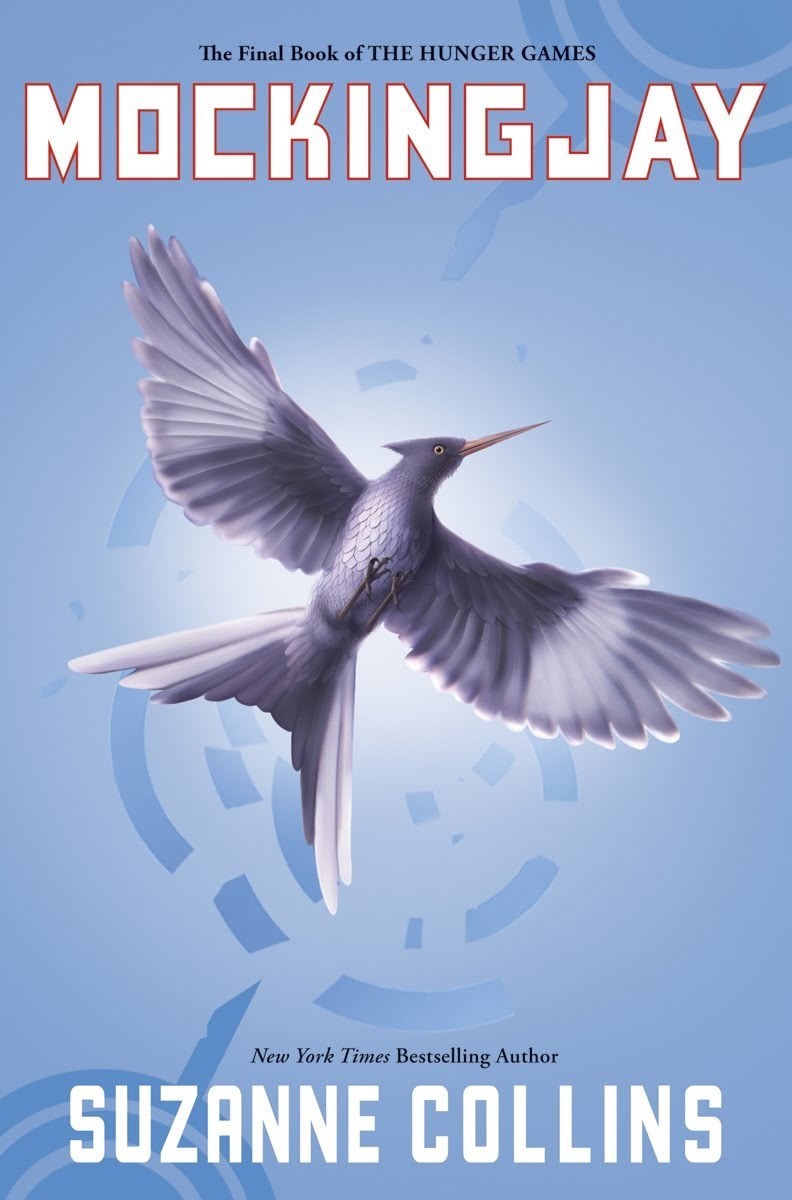
Reflections: Mockingjay

This is the final book in The Hunger Games trilogy. I really liked the final book. The first and second books were mostly suspenseful and disturbing, but the third one really delivered the characters and storyline. The rebellion is in full-swing. The rebels congregate and strengthen the unit in District 13 and are ready to overthrow the Capitol. Katniss represents the symbol of the rebellion - the Mockingjay. Katniss supports the rebellion in principle, but she can’t reconcile the death and ravage it is bringing about. Is it worth any cause to sacrifice the lives of the innocent? The question harangues her and consumes her, but she resolves to kill President Snow, if that’s the last thing she does. Can she save Peeta from the tortuous clutches of the Capitol? Can human-beings ever be able to sustain life after the horrific war? Can she ever lead a normal life after all this? These are the questions that plague the reader as much as Katniss as they race through the book.

Due to all the introspection that the protagonist goes through, much of the heavier themes are suitably addressed in the final book. True, the themes have not been delved into their true, fathomless depths, but it’s a good exploration for a young-adults' book. The writing never came to the forefront of my reading experience until this book. The writing tackles the moral and ethical dilemmas of war, conflict, and revenge, in a manner that both teenagers and adults can feel the severity and weight of the issues. The climax is particularly well-written. Katniss’s growth is tragically and sensitively fleshed out, and real emotions of pain, despair, and agony scream across the pages. True, this book is also heartrendingly painful to read, but everything is conveyed much better than in its prequels. The brutality of the situations is tempered with a certain quality of philosophical irony, and balanced with a good measure of human goodness.

No doubt, this is yet another violent book. I went through similar nightmares as Katniss, just by reading the book. Katniss’s and Peeta’s psychological states were also realistically written.

The main thing the book misses on is the political shift (if any) that happens at the end. What happens to the political situation? What are the new credos? The political manifesto? Will there still be a Capitol and subordinate districts? How would they all operate? Etc.. It’s not clear if democracy is set. Not that it matters to Katniss at this juncture, but the book would have been more powerful if it had at least grazed these questions.

The book ends on the major note that it is important for people to always pay attention to the political scenarios and not remain selfishly complacent with their comfortable outward existence. Each of us plays a role in the political beliefs held by our community as a whole. It’s a nice message for teenagers to think beyond their bubble of entertainment and romance. Political responsibility is indeed important for all of us to cultivate, no matter our age or status.

I think the series works best as a whole, and not necessarily as individual books. Taken together, there is a surprising level of progress in writing, story-telling, and the characters with each book in the series. The entire series proved to be an interesting, if disturbing, read for me.

Friday, July 13, 2012

Reflections: Catching Fire

Catching fire is the second book in The Hunger Games trilogy. I originally wanted to write a combined post on all three books, but realized that I had different things to write about each book, so here are my thoughts on the second book.

I definitely preferred the second book to the first book, probably because the gravity of the premise had finally sunk into me, or perhaps it was because of the progression of events in this book. The plot in this book deals with the possibility of a rebellion against the Capitol. It shows that even the supposedly mindless people of the Capitol still retained some humanity to feel compassion, sorrow, and intolerance towards callous cruelty. It was also a little relieving that there wasn’t as much violence as in the first book. Again, I could predict what the Quarter Quell had in store for Katniss, but I didn’t expect Katniss to be raised to such a high pedestal by the helpless people of the districts. Seeds are sown and the fire of rebellion slowly spreads. The first half of the book sets the stage.

And of course, some shape is given to the romance-triangle that seems to be the formula of every successful teen book - two incredibly awesome, perfect young men hopelessly in love with a confused, headstrong young woman. In addition to all the devastation that the girl witnesses and goes through, she is subject to yet another painful consideration to sort out her emotions and feelings. An ironic tragedy mixed with fairytale romance. This is another ultimate teenage fantasy. It sometimes gets saccharine to repeatedly read of how self-effacing and immaculately noble the men are, and how imperfect and volatile Katniss is, but, it makes for good dreaming. After all, good romance manipulates everyone - even the people of the Capitol.

Katniss and Peeta find themselves in yet another round of The Hunger Games and are thrown into a monstrous arena. Not knowing whom to trust and whom not to, the pair tries to survive for each other, but little do they know that the Game Planner and others have a bigger agenda in mind. The book ends with a completely disorienting suspense, making the third book in the series extremely sought after.

There is a lot of character development in this book, and the writing is as gripping as the first book. Hope and suspense mix into each other, making the second one a thrilling prelude to the final book.


Thursday, July 12, 2012

Reflections: The Hunger Games

After much hype and recommendations, I finally finished the popular Hunger Games trilogy. I’m sure everybody knows what the series is about, but just to continue the tradition of this blog, I will follow the usual format.

This is a dystopian novel set in futuristic North America. The human species has managed to destroy much of civilization and democracy, and now all that remains is the country of Panem. Panem has a dictatorial capital - The Capitol, surrounding which are 12 Districts, each of which specializes in manufacturing a specific class of commodity. Katniss Everdeen is a teenage girl from District 12, the Mining District. Katniss’s life is as gray and sooty as her district. She is the only bread-winner of her small family. Life is pretty much reduced to basic survival for most people in the Districts, whereas the privileged people in the Capitol lavish and waste themselves with excesses that others in the Districts would die for. In order to cruelly stamp its power and dictatorship over the oppressed people of Panem, it is the Capitol’s tradition to host The Hunger Games every year. Two tributes - a girl and a boy (below 18 years) are randomly chosen from each district to compete in the deadly, Hunger Games - a fight to death until one survivor emerges. The Hunger Games are televised as reality entertainment for all people, but only the citizens of the Capitol derive any measure of entertainment from them. Young Katniss finds herself as a participant in the games. The other tribute from her district is the kind boy, Peeta, who harbors feelings for Katniss. Pitted against each other in an unimaginably cruel circumstance, Katniss and Peeta struggle to save each other, their friends, their family, but most of all their self and their mind, before the Capitol robs them of everything they ever were.

The premise of the book is surely very very disturbing. I struggled to get past it, but couldn’t. The thing that disturbs me is not the author’s conceptualization of a cruelly twisted premise, but the knowledge that human-beings can indeed sink to such depths. We are aware of the absolute lows that humanity touched during the wars, so it perhaps is just a matter of more time and degradation of our civilization and humanity before the world comes down to such games. The possibility of this being true in a far away future, is the most scariest of all.

And of course, with America’s current obsession with reality TV, and a million cut-throat game-shows, this book surely (or hopefully) makes people think about drawing boundaries on what makes “entertainment”. The Hunger Games reminded me of shows such as the Bachelor and Bachelorette. Competitions and Games that directly affect people’s lives and emotions cannot ever be part of entertainment! See what I mean when I say this generation is not too far away from the era of the Hunger Games? In fact, the Capitol is the author’s metaphor for all the capitalist excesses and vices that represent America.

So, needless to state, this was a very addictive page-turner. Although some things are predictable, the gore, violence and cruelty really rattled me. I am definitely surprised that a young-adult book contains so much disturbing violence. I can’t say I “enjoyed” reading the book. And I would be loathe to say the book was “entertaining”.  But, it does provoke thoughts. I didn’t pay much attention to the writing because it tends to slip in the background with all the action grabbing one’s attention in the foreground. I’m glad the author addresses the inner-dilemmas of Katniss. Katniss seemed very real and believable (if not always likeable) and I appreciated how her thoughts change and mature over the course of the series. Peeta is extremely loveable. I had to remind myself that he is a fabricated character that came out of the author’s ideal fantasies!

I didn’t find the climax to be a total surprise. From the start of the book I was wondering as to why none of the contestants ever thought of rebelling in a similar way. But it is surprising that the author chose to use this climax as the catalyst for the rest of the series.

The stark realities of survival are harshly portrayed through this series. Well, hopefully teenagers who love the series look past the adrenaline boosting violence and romance, and pay some heed to the subtler warnings and messages the author weaves in.

Tuesday, March 30, 2010

Reflections: The Giver

As an incurable idealist, I have often imagined a futuristic Utopia, where civilizations will coexist harmoniously in a society that offers both equality and individuality. As I keep getting older, each little brick defining this imaginary castle is being taken down. I am coming to terms with the inevitable reality of human existence, reconciling with the fact that it is perhaps unrealistic to hope for Utopia, for there are too many unanticipated eventualities in the process. Many essays and books have been written on how the path to Utopia can turn devious and lead us into Dystopia, but this book is one of the first that explores how the extremes of Utopia can erode some of our fundamental elements. It makes us question if it's worth sacrificing the essence of humanity, for a harmonious life which guarantees peace, equality, and resources for all.

Jonas is a young boy awaiting his eleventh birthday with a bitter-sweet anticipation. On his b'day he will know what his future career would be, and how it would change his life. The momentous day arrives. Based on meticulous monitoring and survey of his potentials and skills, he is assigned the society's most honorable, unique, yet incredibly demanding and challenging job.

He is assigned? Does he have any say? How was he monitored? These are the pivotal questions. Every person in the community gets monitored - their every action, every utterance, and sometimes even thoughts. The Chiefs in the community decide the apt role of every individual in the society, and on their eleventh birthday, assign their future roles/jobs and begin training them. It is an optimal strategy which utilizes every individual's fullest potentials, thus guaranteeing growth and profit to both the community as well as the individual. A picture perfect model of resource allocation, isn't it? Individuals are also mostly content with their assignments. But Jonas's assignment is one of a kind. There is only one person in the entire community who takes up the job and he often gets burdened with intolerable pain and grief. His job is to hold centuries worth of human memories all to himself. Jonas realizes the bitter truth of how his community functions, and the more secrets he unravels, the more convinced he is that his community needs to revert to the days where people could feel emotions such as love and empathy, despite the prevalence of poverty, wars and inequality. Humanity was too heavy a price to pay for Utopia.

Jonas' guide calls himself the Giver. The people in the community have no access to books, have no means of knowing the history of humanity, and the causes and consequences of the evolution of their existence. The keeper of memories shields the people of any kinds of pain - physical pain, pain of losing, pain of hunger, pain of death. Everything in the community is regulated and controlled, such that people are never exposed to any kind of discomfort, let alone pain. Regulated and standardized meals were always provided, any physical pain was immediately pacified through sophisticated drugs and any cause of turbulence was instantly identified, crushed and terminated. Families did not form by themselves. "Family units" were formed based on the capabilities and personalities of males and females. Babies were assigned to those family units which demonstrated good parenting skills, and who seemed compatible with the baby's personality and needs. When people aged, they were sent to special retirement homes, where based on the supply and demand of resources, the aged were provided for, or they were "released" painlessly. A delicate balance of resources was diligently calculated and maintained. Equality, or "sameness" was exemplified. With advances in genetic engineering, every person was born with the exact same traits - skin, hair, eyes, and all other features. Discrimination based on any kind - caste, color, creed, was eradicated. The cones in the eyes were manipulated and the meaning of colors was obliterated. Weather and temperature were minutely controlled - no one knew what rain or snow meant. A world in monotones, where everything worked like clockwork, nature controlled, animals eradicated, history eroded, memories locked up, emotions diluted, individuality meaningless, and humanity -- was lost. Here is a flip side of Utopia when we try to perfect, equalize, standardize and normalize everything.

The tone of the book is reminiscent of Orwell's 1984, although here is a Utopian society of perfectness with nothing to depress one. Too much perfectness perhaps. An automatized society that churned out rational decisions according to relentless numbers. An interesting discussion that Lowry brings out is the importance of memories in helping us gain wisdom and learn. I have discussed this before, but devoid of memories, we are emptied of our precious experiences which help build our wisdom. But memories don't just end with our own. Imagine if we didn't have any means to learn about the world around us, no permission to books that stimulate thinking or to learn what happened in the past, and how they are playing into the future, how appalling would our ignorance be? The memories of humanity's past is equally important to our growth. While the community's motto was "ignorance is bliss", the lack of wisdom heads the Utopian society  to an unstable future.  Besides, pain - be it physical or emotional, also helps us grow (however unpleasant it is to grow through them). A pampered society oblivious to pain, learns very little about life. The keeper of memories attempts to provide the society guidance on their decisions but it turns futile.

Lowry's writing is simple but powerful. I appreciated how she strings the details on the community without any explicit narration. There is an element of mystery and the pieces on how the society functions slowly fall together. But I have to mention that this books is lauded with the Newbery medal, meaning it is a literary children's classic. It is my personal opinion that the topic of discussion is a trifle too heavy for children to comprehend or come to terms with. It will probably offer a good introduction to young adults to ponder on idealism in society. Lowry definitely reinforces the importance of our core values and she beautifully brings out the true meaning of humanity, and being a human.