Friday, July 27, 2012

Reflections: Half a Life

This is the first book of Naipaul's that I managed to finish. I don't understand why his writings and books are so highly acclaimed. I have started and abandoned his books, hoping that one day I will grow smart enough to finish one. Having finished this book, I still struggle to understand what makes this author so special. 

The protagonist is an Indian who, like several others, is unsure of what he wants from life. His cowardly and weak father is of little inspiration to him. He sees the nascent independent India as a lowly, frustrating place to live in, and aspires to get to the west and cultivate himself into a cultured, modern westerner. But he fails, or at the very least, grapples. He is yet again unsure of who he is and what he wants. He realizes that survival is hard, and just like his father, tries to take the easiest path that life offers to meander through his existence. This is a slim story of a man who fritters away half of his life - his prime, his youth - just because of sluggishness, laziness, cowardice, and a lack of substance or self-awareness. Upon entering a life of hedonism and comfort, he sails through life and time without a goal or purpose. One fine day, he reaches the peak of his wastefulness, and upon satiation, moves on to (hopefully) do something more with his life. 

This is what I got out of the book. Naipaul's tone is wry and dry throughout the book. He touches upon colonial hangover, the prejudices of the Indian caste-system and other related social mores, and the hunger that consumes most Indians to migrate to, and ape the west. Once in the West, we struggle with a dichotomous identity, neither fitting in nor standing out. We have read these themes in hundreds of books, so what makes this particular book special? I don't know. 

The story of how a man thoughtlessly and mindlessly squandered away half of his life by leeching onto someone is neither interesting nor inspiring. What did Naipaul hope to convey through this story (if it can be called that), I have no clue. The writing was insipid and boring, none of the characters were remotely likeable nor worthy of empathy, and the plot was completely flat. There was not a single thread of anything likeable. 

This is the account of a man who does nothing in life - hiding behind the shadows and indulging in the pleasures of the senses. Perhaps it's a subtle pointer at how most of us lead similar aimless lives? That even slothfulness satiates after a certain point? That we humans can't escape from dealing with self-awareness? Smart people should be kind enough to hammer into my pea-brain the reason and deeper significance of why this book and the author is so acclaimed. 


Thursday, July 26, 2012

Reflections: The Diary of Anne Frank

I had a slim opportunity to visit Amsterdam recently. Just the mention of the syllables that make "Amsterdam" bring to mind two dominant memories - one is a fleeting visit with my parents when I was barely old enough to register more sophisticated memories than feelings of "cold" and "new", and the other is of course, Anne Frank. Anne Frank was in my thoughts almost all the time, so I decided to reread her poignant diary. I was mildly interested to know if the diary read differently to me, now that I am much more older than I first read it. But surprisingly, I could relate to it much more this time.

There are no words to describe the mix of emotions I went through while reading the diary as it slowly progressed and matured. The ramblings and rantings in my own journal have the same quality of alternating despair and enthusiasm as hers, except Anne matured and grew up so very beautifully and wisely, and her writings have such heart-breaking insights that the words twist my heart every time I read them. Her experiences highlight, yet again, the stark extremes of humanity - touching kindness and ruthless cruelty; petty materialism and progressive open-mindedness; steely determination and fragile will-power.  Anne's witty and clever observations keep ringing in my head. I believe that it was her undying hope and positivity that eventually brought a sliver of her dreams to fruition. Her determination to be a successful writer who would be fondly remembered, has indeed come true.

How wise was she to have written such touchingly beautiful thoughts at an age when my diary was filled with narcissistic angst -

"At such moments I don't think about all the misery, but about the beauty that still remains. This is where Mother and I differ greatly. Her advice in the face of melancholy is: "Think about all the suffering in the world and be thankful you're not part of it." My advice is: "Go outside, to the country, enjoy the sun and all nature has to offer. Go outside and try to recapture the happiness within yourself; think of all the beauty in yourself and in everything around you and be happy."
 
"I don't think Mother's advice can be right, because what are you supposed to do if you become part of the suffering? You'd be completely lost. On the contrary, beauty remains, even in misfortune. If you just look for it, you discover more and more happiness and regain your balance. A person who's happy will make others happy; a person who has courage and faith will never die in misery!"

One can only hope that her bright and positive attitude helped her get through her harrowing times at the concentration camp. It's a good lesson and reminder to stay happy and discover beauty at all times.

If you haven't read her diary, I would urge you to read it. Yes, it's sad and tragic, but also immeasurably inspiring and touching.


Saturday, July 14, 2012

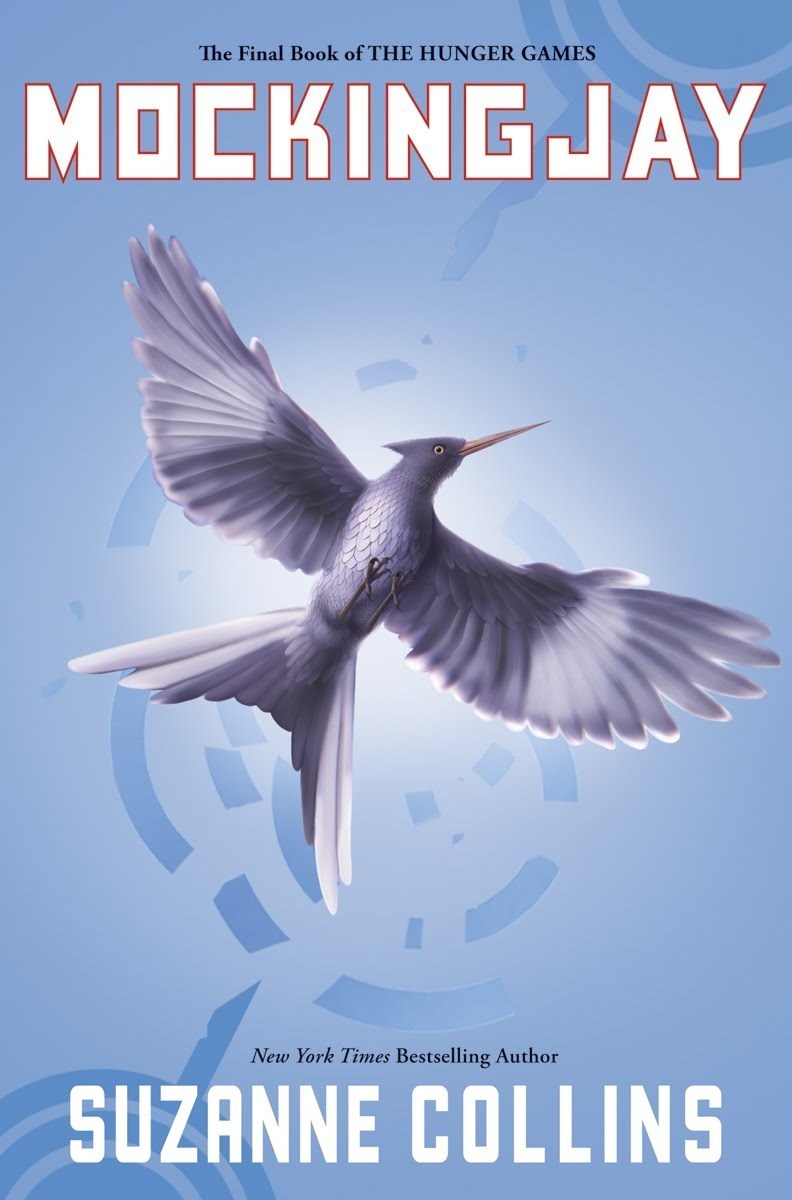
Reflections: Mockingjay

This is the final book in The Hunger Games trilogy. I really liked the final book. The first and second books were mostly suspenseful and disturbing, but the third one really delivered the characters and storyline. The rebellion is in full-swing. The rebels congregate and strengthen the unit in District 13 and are ready to overthrow the Capitol. Katniss represents the symbol of the rebellion - the Mockingjay. Katniss supports the rebellion in principle, but she can’t reconcile the death and ravage it is bringing about. Is it worth any cause to sacrifice the lives of the innocent? The question harangues her and consumes her, but she resolves to kill President Snow, if that’s the last thing she does. Can she save Peeta from the tortuous clutches of the Capitol? Can human-beings ever be able to sustain life after the horrific war? Can she ever lead a normal life after all this? These are the questions that plague the reader as much as Katniss as they race through the book.

Due to all the introspection that the protagonist goes through, much of the heavier themes are suitably addressed in the final book. True, the themes have not been delved into their true, fathomless depths, but it’s a good exploration for a young-adults' book. The writing never came to the forefront of my reading experience until this book. The writing tackles the moral and ethical dilemmas of war, conflict, and revenge, in a manner that both teenagers and adults can feel the severity and weight of the issues. The climax is particularly well-written. Katniss’s growth is tragically and sensitively fleshed out, and real emotions of pain, despair, and agony scream across the pages. True, this book is also heartrendingly painful to read, but everything is conveyed much better than in its prequels. The brutality of the situations is tempered with a certain quality of philosophical irony, and balanced with a good measure of human goodness.

No doubt, this is yet another violent book. I went through similar nightmares as Katniss, just by reading the book. Katniss’s and Peeta’s psychological states were also realistically written.

The main thing the book misses on is the political shift (if any) that happens at the end. What happens to the political situation? What are the new credos? The political manifesto? Will there still be a Capitol and subordinate districts? How would they all operate? Etc.. It’s not clear if democracy is set. Not that it matters to Katniss at this juncture, but the book would have been more powerful if it had at least grazed these questions.

The book ends on the major note that it is important for people to always pay attention to the political scenarios and not remain selfishly complacent with their comfortable outward existence. Each of us plays a role in the political beliefs held by our community as a whole. It’s a nice message for teenagers to think beyond their bubble of entertainment and romance. Political responsibility is indeed important for all of us to cultivate, no matter our age or status.

I think the series works best as a whole, and not necessarily as individual books. Taken together, there is a surprising level of progress in writing, story-telling, and the characters with each book in the series. The entire series proved to be an interesting, if disturbing, read for me.

Friday, July 13, 2012

Reflections: Catching Fire

Catching fire is the second book in The Hunger Games trilogy. I originally wanted to write a combined post on all three books, but realized that I had different things to write about each book, so here are my thoughts on the second book.

I definitely preferred the second book to the first book, probably because the gravity of the premise had finally sunk into me, or perhaps it was because of the progression of events in this book. The plot in this book deals with the possibility of a rebellion against the Capitol. It shows that even the supposedly mindless people of the Capitol still retained some humanity to feel compassion, sorrow, and intolerance towards callous cruelty. It was also a little relieving that there wasn’t as much violence as in the first book. Again, I could predict what the Quarter Quell had in store for Katniss, but I didn’t expect Katniss to be raised to such a high pedestal by the helpless people of the districts. Seeds are sown and the fire of rebellion slowly spreads. The first half of the book sets the stage.

And of course, some shape is given to the romance-triangle that seems to be the formula of every successful teen book - two incredibly awesome, perfect young men hopelessly in love with a confused, headstrong young woman. In addition to all the devastation that the girl witnesses and goes through, she is subject to yet another painful consideration to sort out her emotions and feelings. An ironic tragedy mixed with fairytale romance. This is another ultimate teenage fantasy. It sometimes gets saccharine to repeatedly read of how self-effacing and immaculately noble the men are, and how imperfect and volatile Katniss is, but, it makes for good dreaming. After all, good romance manipulates everyone - even the people of the Capitol.

Katniss and Peeta find themselves in yet another round of The Hunger Games and are thrown into a monstrous arena. Not knowing whom to trust and whom not to, the pair tries to survive for each other, but little do they know that the Game Planner and others have a bigger agenda in mind. The book ends with a completely disorienting suspense, making the third book in the series extremely sought after.

There is a lot of character development in this book, and the writing is as gripping as the first book. Hope and suspense mix into each other, making the second one a thrilling prelude to the final book.


Thursday, July 12, 2012

Reflections: The Hunger Games

After much hype and recommendations, I finally finished the popular Hunger Games trilogy. I’m sure everybody knows what the series is about, but just to continue the tradition of this blog, I will follow the usual format.

This is a dystopian novel set in futuristic North America. The human species has managed to destroy much of civilization and democracy, and now all that remains is the country of Panem. Panem has a dictatorial capital - The Capitol, surrounding which are 12 Districts, each of which specializes in manufacturing a specific class of commodity. Katniss Everdeen is a teenage girl from District 12, the Mining District. Katniss’s life is as gray and sooty as her district. She is the only bread-winner of her small family. Life is pretty much reduced to basic survival for most people in the Districts, whereas the privileged people in the Capitol lavish and waste themselves with excesses that others in the Districts would die for. In order to cruelly stamp its power and dictatorship over the oppressed people of Panem, it is the Capitol’s tradition to host The Hunger Games every year. Two tributes - a girl and a boy (below 18 years) are randomly chosen from each district to compete in the deadly, Hunger Games - a fight to death until one survivor emerges. The Hunger Games are televised as reality entertainment for all people, but only the citizens of the Capitol derive any measure of entertainment from them. Young Katniss finds herself as a participant in the games. The other tribute from her district is the kind boy, Peeta, who harbors feelings for Katniss. Pitted against each other in an unimaginably cruel circumstance, Katniss and Peeta struggle to save each other, their friends, their family, but most of all their self and their mind, before the Capitol robs them of everything they ever were.

The premise of the book is surely very very disturbing. I struggled to get past it, but couldn’t. The thing that disturbs me is not the author’s conceptualization of a cruelly twisted premise, but the knowledge that human-beings can indeed sink to such depths. We are aware of the absolute lows that humanity touched during the wars, so it perhaps is just a matter of more time and degradation of our civilization and humanity before the world comes down to such games. The possibility of this being true in a far away future, is the most scariest of all.

And of course, with America’s current obsession with reality TV, and a million cut-throat game-shows, this book surely (or hopefully) makes people think about drawing boundaries on what makes “entertainment”. The Hunger Games reminded me of shows such as the Bachelor and Bachelorette. Competitions and Games that directly affect people’s lives and emotions cannot ever be part of entertainment! See what I mean when I say this generation is not too far away from the era of the Hunger Games? In fact, the Capitol is the author’s metaphor for all the capitalist excesses and vices that represent America.

So, needless to state, this was a very addictive page-turner. Although some things are predictable, the gore, violence and cruelty really rattled me. I am definitely surprised that a young-adult book contains so much disturbing violence. I can’t say I “enjoyed” reading the book. And I would be loathe to say the book was “entertaining”.  But, it does provoke thoughts. I didn’t pay much attention to the writing because it tends to slip in the background with all the action grabbing one’s attention in the foreground. I’m glad the author addresses the inner-dilemmas of Katniss. Katniss seemed very real and believable (if not always likeable) and I appreciated how her thoughts change and mature over the course of the series. Peeta is extremely loveable. I had to remind myself that he is a fabricated character that came out of the author’s ideal fantasies!

I didn’t find the climax to be a total surprise. From the start of the book I was wondering as to why none of the contestants ever thought of rebelling in a similar way. But it is surprising that the author chose to use this climax as the catalyst for the rest of the series.

The stark realities of survival are harshly portrayed through this series. Well, hopefully teenagers who love the series look past the adrenaline boosting violence and romance, and pay some heed to the subtler warnings and messages the author weaves in.

Monday, July 09, 2012

Belonging

Marriage seems to have given me a new perspective on several things, but most specifically, it has widened my understanding of family ties and dynamics. I now find myself perfectly comprehending the internal family dynamics that pushed and pulled and confused my own mother, way back in the past. Having begun to walk my own path in her shoes, I have a new sense of revelation of everything related to family. The shoes that I am walking in, are the shoes that every bride and wife walks in. But, a few years earlier, I would have never guessed that these shoes held so much in them to define my feelings towards family units.

They have taught me how immeasurably significant my own family clan is to me. Having taken my own family and extended family for granted for decades, I have now come to this place of such intense longing for my own people, that it surprises me immensely. A recent family reunion has left me homesick or rather family-sick, for perhaps the very first time. Even though my own parents were not part of the gathering, I felt, so very very much, at home. It felt so overwhelmingly good to BELONG, so very unconditionally, just implicitly. Despite the petty differences and the inevitable trivialities  simmering in the background, I reveled in the certainty that I am implicitly accepted for who I am, and just the way I am. I will remain inextricably a part of them, and the feeling was so heady, so comforting, so peaceful. The feeling screamed - "Your are one of the daughters of the clan". Period. I carry in my veins the unique legacy and history that everybody around me shares and identifies with. Uncles, aunts, and cousins mirror me - myself, something strong within my core. And that moves me, refreshes me, in a way I never imagined possible. I could grasp that common thread that binds us and that transmits love, no matter what. For it assures me that I don't have to guard myself every minute; that I don't have to think twice, thrice, before uttering every single sentence; that I don't have to replay my responses in my head and worry if I did alright; that I don't have to be cautious of my every action; that I don't have to EVER wonder if I'm being judged, evaluated, scanned, or scrutinized; that I don't have to fret over whether I'm being accepted, and if I would be allowed to belong.

It felt exhilarating to not wonder about my acceptance and place. Acceptance embraced me from every nook. The sense of belonging that pervaded me is a precious tonic, a loving shoulder to lean on. I have never smiled so much, and so openly and happily in a very long time. I never thought I would be moved by meeting second cousins for the very first time.

I'm grateful for these ties that always hold me tight, no matter where I go. And I'm grateful for the joy that my primordial sense of belonging gives me. I can now understand the fierce protectiveness that people cultivate towards their place of belonging. I know, it's the motivation of our selfish genes, but nonetheless, I am grateful.

Monday, May 28, 2012

Reflections: The Remains of the Day

This is a deceptively simple novel about the gradual change of an era in British society. Mr. Stevens is a Jeeves-like dignified butler who was under the employment of a renowned British aristocrat. The novel is set in the post Second World War time-period wherein Mr. Stevens is recording his thoughts on his present and past life. Mr. Stevens recounts his professional experiences as a butler in a passionate and dedicated fervor, and in a fitting contrast, he nonchalantly mentions a sliver of his personal life that he deems appropriate to share - even to himself. His life revolved around his role and service as a butler. His father was a butler as well, and an excellent one at that. He takes pride in the fact that he walked in the same shoes and trod the same path as his father - being unerringly loyal, unforgivably punctilious, and most admittedly stiff-upper lipped. He wore his mask well, earnestly maintaining his dignity and professional perfection. His unwavering professional sincerity cost him other opportunities and experiences that life promised to offer. This isn’t much of a story per se, but it is a true to life narration that touches the reader.

Mr. Stevens’s story of complete professional absorption can be related by many people. Several of us have, and continue to make quite a bit of personal sacrifices to remain true to our professions. One’s professional dignity and success often comes in the way of other meaningful paths that briefly pass by. But, a very high standard of self-imposed perfectionism tends to blind one from taking pleasure in the many simple (if trivial) and other rewarding joys and pursuits. It’s important to pause and smell the roses along the way. But Stevens was one to be only concerned with the proper tending of the rose-bush than to ever allow himself to enjoy even a whiff of it. And in the end, what remains is the bitter-sweet reminder of the glorious and dark days that are now mistily behind him. What he has surely gained are his priceless dignity and rueful wisdom.

Another parallel thread in this novel is the discussion on  the extent of significance, trust, and even subtle clout that used to be associated with being a traditional English butler. True to Jeeves’s hilarious caricature, the butler often steered the course of many important events in the house. They were privy to every kind of information, they astutely knew of  the intimate workings of the house and its inmates, and they possessed enough power to subtly make a few strategic decisions. The Lords relied and looked upon trustworthy, wise butlers as their benevolent oracles who could guide them and uphold their prestige at all times. Butlers literally used to be friends, guides, and philosophers to their employers. But what were the costs to such over-reliance? Butlers are not super-heroes by any measure. Did this image of unrealistic perfection and wisdom weigh down the life of several people who aspired to be like Mr. Stevens? Was the aspiration even worth it?

 
The writing beautifully conveys the innermost tone and attitude of Mr. Stevens. Through simple and realistic writing, Ishiguro brings to light the impeccable character of Mr. Stevens.This is an interesting, reflective read.

Saturday, April 28, 2012

Memorable Books: The World of Psmith

Karthik from Random Thoughts is sharing his thoughts on one of my most favorite authors! Karthik presents the rare mix of intelligence, wittiness, idealism, and warm geniality! His excellent sense of humor, humane principles, and immense generosity make him a great friend. I value his views and I'm so glad he's contributing!
------------------------------------------------------------------------------
At the outset, let me thank Neeraja for her gracious acceptance of this post, and for including this post among the wonderfully perceptive writings from her pen.

Given that I had to finally pick one book, I mulled at length on various options. Finally, after pretending to think for about three milli-seconds, I settled on "The world of Psmith" by PG Wodehouse, perhaps my favourite book, which I first read in my impressionable teen years. Of course, I cheated cos this is really a 3 in 1 omnibus :-)

Psmith is quite the character - Impeccably dressed, polite to a fault, eccentric, monocle-sporting enterprising young man, with an upbeat, and sanguine approach to life. In his inimitable style, he embarks on several far-fetched schemes that land him in all kinds of curious situations, from which he eventually extricates himself; but not before causing much comic anxiety to his fellow comrades, primarily his good friend Mike.. As with all Wodehouse stories, the story lines are convoluted, and hard to compress into a few lines. It suffices to say that Psmith's adventurous streak leads him to explore several career paths that range from being a banker, and a journalist, to masquerading as a poet.

To me, Psmith represents the 'Don't despair ! Come ! let's figure out a way to solve this, and have fun along the way!' school of thought/action. Even on occasions when he does lose, for instance his job, he does so in style, resigning before being fired, offering words of consolation in a facetious manner causing further grief and embarrassment to his boss ! Pmisth's way of life convinces me that being goofy, and not taking life so seriously, could well be one path to wisdom :-)

The real world often pales in comparison to the wondrous possibilities that the Wodehousian one offers. However, having read this book at an impressionable age, Psmith's outlook continues to appeal to me, though it needs to be tempered with the necessary dose of authenticity and pragmatism for it to be even remotely applicable to the real world. On occasions when I have felt low, I have often turned to this book to raise my spirits, and it has never let me down. In fact, I know of at least one unconventional book on personal mastery that actually recommends reading Psmith, and observing the way he responds to the interesting questions that life throws at us now and then :-)

As with much of Wodehouse's writings, the quality of 'adult innocence' shines through. Having been exposed to Wodehouse's writings, classy and refined in all their silliness, I ended up developing an active dislike for the crude brand of double entendres that often pass off as humour these days.

I'm always amazed as to how little the world has changed in the 100 odd years since he wrote some of his books ! Would the world be a better place if they made Wodehouse mandatory reading in high school/college? Well, I certainly think so. Wodehouse packs in so much about real life in so subtle a way, that one could well call it 'deceptive silliness'. There is much wisdom, and understanding of human foibles behind his writings, cleverly hidden beneath all the humour, and they gently remind us to not take ourselves too seriously( Wouldn't the world be a better place if this notion alone had been drilled into everyone's heads? :).

Unlike other heroes who often disappoint us with the real life example they set, I had no such trouble with Wodehouse, with him coming across as a gentle, kind person by all accounts. If you enjoy reading Wodehouse, you will almost certainly enjoy this omnibus! Chemistry labs have been known to stock copies of this book in the event of them running out of nitrous oxide. And at the risk of facing stiff opposition, if there is just one work of fiction I could take away with me to a desert island, I have no hesitation in declaring that this would be it !
-----------------------------------------------------------------------
Karthik, my heart sings and dances reading each sentence! Awesome post! Psmith is one my favorite characters as well. As one Wodehousian to another, I can't say how thrilled I am to hear you capture the essence and brilliance of Wodehouse. "Deceptive silliness" - how true! The world would definitely be a better place if Wodehouse is made mandatory reading in schools :). Thanks again for the excellent post!

If you're interested in participating in this guest feature here's more information on it.

Friday, April 27, 2012

Reflections: The Art of Choosing

Life is often a stream of choices. The choices that we make - from the mundane ones to the course-altering ones - lead our journeys through beautiful vistas, shocking unexpected turns, rounding on smooth valleys, carrying us up to dizzying altitudes, dropping us down sudden pitfalls, and pushing us towards dark dead-ends. Choice is celebrated. The freedom, the power, the very right to be able to choose something is a fundamental necessity for most of us. We pity those with little or no choice, vociferously argue about one’s free-will, and regard our lives to be doomed and stripped of dignity without the ability to exercise our power to choose and decide.

What’s more to Choosing? Plenty more. In this excellent book, Dr. Iyengar presents decades of research (of hers and others) exploring Choice from multiple dimensions. How important is choice to our biological survival instincts, how do different people perceive choice from the complicated lens of religion and culture? How is choice connected to one’s identity? Is choice the medium through which we express our individuality? But then how much of our “independent” choices  are really that unique and independent, resisting social mores, economic influences, and factors of subtle manipulation? When do we make rational choices, and when do we make impulsive, intuitive ones? Is one better than the other? All the time? Can there ever be too much choice? Could choice be white noise, a distraction, a detractor, a burden to cloud our decisions? Can a plethora of choices always keep us happy and satisfied? And finally, my personal irony - choice as a tool for punishment - the dilemmas between equally unpleasant choices that paralyze and destroy one’s peace. Is choice really a blessing in such instances? So many questions, so many issues on Choice? Yes, Dr. Iyengar beautifully writes of the many facets of choice, its implications on our everyday life, and the policies that govern our Nations and Markets.

From beginning to end, this is a brilliantly engaging book. Dr. Iyengar is blind. So, she draws stories from her own life to explain the role of Choice. These sections were the most thought-provoking to me. I probably had goosebumps every few minutes. Every sentence is beautiful and insightful. The depth of research that fills the pages is so satisfying to the researcher in me. Since the areas of cognitive decision-making and information processing cross into my purview of study, I was very happy to see all the classic papers cited and talked about. Most of the book can be thought of as an exhaustive literature review in the fields of Choice & Decision-Making. But, it’s Dr. Iyengar’s talent to weave a compelling and readable book that makes all the difference between reading a bunch of journal abstracts and this one. She has a sure flair for telling stories in a simple and relatable manner that doesn’t compromise on the science, but still retains the reader’s fascination and understanding of the big picture of the findings. I loved her writing and narration, and can’t mention enough good things. She has become a mentor and an inspiration for me - as an impressive researcher, a great writer, and a hard-working human-being.

The rest of this long and hideous post is going to contain my reflections (not review) of the chapters of the book. I want to record these basic take-aways from the book for future reference. So, please ignore the following if you want to read this book ( I very highly recommend it) and find it for yourself.

*******************************************************************
Chapter 1: We perceive our ability and opportunity to make choices, only if we believe that we possess a measure of control over our lives. The one who believes that his/her life cannot be controlled or changed, will never exercise their freedom to choose. We berate such individuals, such fatalists. But, through chilling studies that were conducted on rats and dogs, it is found that even rats (the so-called animals with no sophisticated thoughts or beliefs) either choose to survive or choose to not. Even animals choose to survive only if they believe they can change the situation and have been rewarded in the past for trying to change. Animals that have been put in experiments (circumstances) wherein they have never “won” a way out or received any rewards, give up more easily, more frequently. Sound familiar? If someone’s life has been tough through and through, and they have never been able to change their trying circumstances, they are likely to not grab onto the choices that suddenly come their way, even if you teach them to.

This belief on the extent of control we have over our lives is crucial to our well-being, the optimism we learn to acquire, and the resilience to fight for survival. We give up choosing, we see no more choices when we’ve been beaten down every time. 

 
Chapter 2: A favorite chapter. Individualism vs. Collectivism. The individualists want to choose, and choose for themselves, while the collectivists are trained to let others choose for them. Is one way better than the other? Not necessarily, and surely not all the time. But, choice is viewed differently by different cultures. The East’s view of arranged marriages is born from the collectivists’ strategy. The family shall choose for the betterment of both families, the individual’s duty is to obey. The individual in these cultures often doesn’t seem stifled by the lack of (or limited) choice, but conforms to it to in the name of duty and trust. And such behavior and adherence to duty is celebrated and rewarded. Duty vs. self-interest - another favorite topic of mine. But this system works (or used to work) because the communities are dependent on each other much more than in the individualistic society. There is a greater expectation of reciprocity, and hence the necessity to follow certain duties for the betterment of the entire community and oneself.

But what is fascinating is how this view of choice affects children and adults from these different cultures. Interesting studies show that Asian kids are more at ease and more successful when their mothers choose certain things for them, whereas their American counterparts feel infuriated and perform poorly. Understandably.

There is a good discussion of communism vs. capitalism in the context of choice, and how even people from ex-communist countries who waited to be liberated, no longer rejoice and celebrate their freedom to choose. They feel burdened, dissatisfied and unhappy with too many choices and not being able to use them all. Orthodox, religious individuals with rules and constraining choices on how to live, rate themselves as happier and more satisfied than individuals who are not religious and have endless choices. Why?

Freedom to choose also hands us the responsibility to chart our own course. There are no signs, omens, signals, rules, duties, faith, prayers to guide us. If we choose wrongly, we have nothing to fall back on to assuage our confusion and fear.


Sometimes, we like things to be more structured. Sometimes, we like rules. And sometimes, we like fewer choices. A revelation? Perceptions on choice, freedom, and opportunity are more complex and layered than we think.

Chapter 3: Self-expression is accomplished through the choices we make to present ourselves. The clothes we choose to wear, the things we buy, the car we ride, the interior of our homes, the opinions we hold, the decisions we stand by - make a statement, paint a picture, a unique picture (we like to believe) of our identity. Who we are, affect our choices, and our choices consequently affect who we become. There is this obsession to be unique, to be different, to choose differently. And yet, how similar are we! Are we more similar to each other than we want to believe? We don’t want to be too different and unique, for after all, we want to fit-in. But we don’t want to follow the herd either. We keep looking for that elusive balance - the “optimum level of uniqueness” that doesn’t socially isolate us, and yet, just makes us step out a little, just a hint.

We will all buy Iphones and Ipads, but we will still vehemently believe to be unique in our decisions. “The reason why I bought it is different from hers.” “I don’t want to buy this color - everyone seems to carry it.” Ah, the clever trap laid by the marketing geniuses! Nobody is free from social pressures. No identity is perhaps supremely authentic, as much as we strive to believe. We constantly align our perceptions to others’ perceptions of us. I buy something not just for myself and to assert my individuality, but also with the understanding of how it will be perceived. We can’t live with people making wrong assumptions and holding incorrect perceptions of our identity! If so, we have to rush to rectify their perception.

So, choosing is not such a private activity after all. It’s more of a social one.

Chapter 4: Rationally derived choices, and rationally chosen decisions are not always sensible. Sometimes, heuristics and intuition (or informed intuition) is better. Emotions cannot be quantified and fit into rational models of effective decision-making. Intuition isn’t necessarily irrational. We have evolved to be sensitive to many subtle cues around us to help us understand our environment better. It’s because our great-great-great-grand ancestor sprinted to safety when he heard the subtle movements of far-away rustling leaves which intuited to him of an approaching predator, you and me are alive. He didn’t do math or wait for a solid indication, he went with his gut. But his “gut” was informed by very very subtle, nuanced cues that are sometimes hard and impossible to verbalize, understand, or quantify. This book gives astounding examples of intuitive decision-making by doctors, rescue-workers, and even pilots.

But heuristic decision-making can also be terribly flawed and riddled with biases. We might choose to never ever EVER buy a certain brand of TV again, even if statistically speaking, your bad experience was only one of several million positive ones. Math doesn’t come into the picture. Logic flies out the window. Your 1 bad experience will lead you away from it. You will “rationally” choose to do so.

So, how rationally informed are our choices, if we talk of freedom and responsibility of decision-making?

Chapter 5: So, the things that we buy have little to do with personality, authenticity of individuality, and more to do with social forces. What about market forces? I have always wondered about the fashion industry. Are these fashion choices shaped by trend? Who decides the trend? You? The fashion diva? Or the fashion retailer?

This is a chapter that marketing professionals and students would love (and I guess, they would already know). Packaging, color and so many other little tricks influence YOU, the informed, rational, unique, individualistic, responsible customer, in ways that make you seem like a brainwashed automaton.There is illusion of variety, illusion of choice, and illusion of self-expression. You are manipulated to pick up even a boring sweater, because of the clever deviousness of marketing geniuses and fashion retailers who read you and your personality 2 years ahead of time. They expose you to fashion choices that make you believe that you are setting the trend than the other way around. Due to the necessity to fit in, you would rationally choose to follow the trend, albeit in your own slightly specialized way, thanks to the clever little variations you are provided with at the stores!

In psychological terms, you are primed to choose in a certain way, and select certain things. Your subconscious is manipulated and influenced in subtle and harmless ways (after all, fashion doesn’t hurt) to choose the “right” things. This is harmless enough, but what if the consequences to the manipulation are high and significant?

Chapter 6: Too much choice - how can it ever be bad? Well, our brain has its limitations, no matter how distasteful it is for us to hear. We can only process limited amounts of information (5,7,or 9 chunks of information), so hundreds of choices will overwhelm us, confuse us, and contribute to bad decisions more often. And, it leaves us less-satisfied and exhausted all the time. If there are 900 choices of shoes, how long will it take you to find the one you like and that suits you? Especially if you want to try everything and not miss out on something better? If you narrow them down to 100 similar shoes after hours of trials, what next? You tear your hair out, finally pick the blue one and come home and wonder, maybe the green looks better? You return the blue, get the green one and soon wonder about another color, another design that your friend raves about. When will it ever end?! And the more effort you expend to choose the perfect pair, the more you seem tired and the more you seem to compromise on quality, eventually. Or not buy anything at all.

Ok, that’s just about shoes. Thanks to the internet and the review system, we can live with such annoyances of capitalistic excess. But what if you had 250 medical insurance policies, 550 investment options, 700 retirement plans? How will you wade through so many choices when the outcome is pivotal to your life and well-being? And most importantly, why should there be so many choices on something so basic and essential to all of us? And besides, our goals are essentially the same - save as much money as possible, in the end.

I once saw a two year old at a fare, wailing and rolling on the floor, throwing a tantrum of her life. Her mom guessed she was hungry. So, she started, “Honey, would you like a banana?” “Nooooooooooooooo”, shrieked the toddler. “Would you like apple sauce?...Would you like to have some cheese...maybe some yogurt.... how about some grapes... would you like to have some milk? Some pasta? Some french-fries? Mac and Cheese? A smoothie? A pretzel? That ice-cream over there?A nice sandwich? Some gummy bears”....
And all the while, the toddler wailed and screamed and kicked and consistently shrieked, “NOOOOOO!”

I wanted to intervene very badly, and tell the mom - Lady, she is two! She is hungry, she is tired. Just give her something to eat! Put something in front of her, feed her if need be. Stop asking these annoying questions. You are not giving her the exalted freedom to choose, you are just irritating and confusing her. Besides, she is not in a position to choose for herself. It’s okay, you don’t have to read the entire menu to a 2 year old. It’s okay, you’re not depriving her or controlling her by making a simple choice for her as her mother in her hungry state!! And she is two!!

I am not kidding when I say this. Some time later, the same lady and the kid walks into the restroom with me. And the lady goes, “Honey, would you like to go in here, or here, or here.... or here”.... If I hadn’t bit myself, I would have slapped her.

Sometimes, we don’t know where to draw the line. Sometimes too many choices are ridiculous and contribute to very little. Sometimes, it’s okay to rely on others to choose for us. Sometimes, it’s okay to not have an array of choices that confuse and interfere with your ability to make an informed, wise decision. Sometimes, too many choices are unnecessary and just plain white-noise.

Chapter 7: The final and my personal favorite. Remember Sophie’s choice? A sadistic Nazi gives the terrorized Sophie two choices as she enters the concentration camp with her two children - either you choose which child should live and which should die, or both die. Choose. The choice is all yours.

Such choices are cruel punishments. It’s empty and even more meaningless when you hear others say - “Well, you always have a choice!” Such choices break you forever with the burden of carrying the guilt for the rest of your lives.

Patients and adults in the U.S have a say in all their medical procedures. Adults and patients in France, don’t have much of a say. The doctors decide what to do and when to pull the plug. Dr. Iyengar conducted a series of studies with parents from the U.S and France who had lost their newborn babies. If a newborn is critically ill with 50% chance of death, and 50% chance of surviving in a vegetative state for the rest of its life, the decision that confronts the parents is pure torture. Parents in the U.S get to decide whether or not to pull the plug on their child. They make the tough decision. They get to choose, for the medical policies are rightfully amended in this country to always let the patient/loved-ones choose. The French parents don’t get to decide. The doctors decide. Which set of parents is better-off now?

Very interestingly, after a year or two of such a painful experience, it’s been found that the French parents were able to move on and cope with the loss much better than their American counterparts. The American parents fell into depression because they took the brunt of making the painful decision, even if they believed it was the rational one. They were still haunted by the “what if’s”, whereas the French parents could console themselves by saying, “it wasn’t up to me”.... the doctor’s decision absolved them, saved them. The American parents resented the choice, the decision. They blamed the system, and were unhappy and guilt-ridden.

Something to think about. It’s merciful if painful choices are removed from you. Coping with loss is easier than coping with guilt.

**************************************************************************
My fingers ache, so I should stop now. But this was a great book and a great exercise to write down my thoughts on all the chapters. The one thing that I wished Dr. Iyengar talked about a little more is Choice in the light of prediction and astrology. She touches on it in the epilogue, but I would have liked a chapter. But such discussions enter the realm of mysticism and philosophy, and as a scientist she probably didn’t want to speculate, and decided to leave a few mysteries for the reader to figure out.

An excellent book of insights into you and your life as shaped and seen through Choice. It’s a real art to choose. 
 

Monday, April 23, 2012

Memorable Books: The Particular Sadness of Lemon Cake

Aparna from Musings, has decided to share her thoughts on another memorable book that she happened to read recently. Thanks Aparna!
-----------------------------------------------------------------------------------------------------------------------
On a saturday afternoon, after my son (3 year old that he is) decided that he wanted to hop along to his cousin sister's house to stay overnight, and, (to my dismay!!!) hubby dear wanted to choose this exact day to go on a Tirupati trip, instead of brooding over the fact that they had happily left me to pursue their interests, I decided to visit the library and get some interesting books. I had an entire day all to myself, and what more could I ask for! All these days, catering to the little fellow took up most of my time, the rest of which I was at work or sleeping; I couldn't have got a better opportunity than this. 

This day was when I chanced upon the novel called "The Particular sadness of a lemon cake". Usually on my library trips, I pick books recommended by friends or cousins.  But the title of this one caught my attention, and I read the prologue. It sounded so intriguing and different from the usual, that I decided to pick it. And true to the name and prologue, what a wonderful read this turned out to be.

The very idea of having the capability to discern the feelings of the person preparing a dish was what captured my attention here. I mean, imagine having the ability to do this. And imagine having to live through it knowing about the person's innermost thoughts, desires, and whatever not.  

This little girl, Rose, is bouncing along through her life, till it takes a nightmarish turn on the week of her 9th birthday. Oblivious of what was in store, she is thrilled to sink her teeth into the soft and gooey chocolate-lemon cake that her mother has lovingly baked for her. And to her shock, though she is able to feel the taste of the cake, which is mind-blowing and close to being the best cake in the world, the feelings she can gather in those bites is so overwhelming, that she just cannot seem to enjoy the cake. She attempts in vain, to get the feeling out of her system. Starting with this experience, in every other meal that her mother prepares for her, she cannot seem to enjoy the meal, as she is able to feel the emotions of her mother; the emotions which her mother successfully conceals and puts up a smiling and "all is hunky dory" look on her face. The mother, though, is not so successful in doing that with her daughter. Rose knows her mothers innermost thoughts. It's like the dishes speak to her. They linger over her tongue and pass through her throat engulfing her in the sadness, desires and feelings. Over various days, with the help of experiments with a friend who believes in her capability, she comes to terms with the fact that this is what she has to live through the rest of her life. 

This novel goes on to talk about Rose, her struggle to live through life with this new found ability of hers, her mother's secret, her brother's in-explainable behavioral traits, her father and his distance from the family, her little trysts with so-called friends, and finally, her attempt to using this unique ability of hers to actually be able to enjoy the rest of her life. 

Aimee has captured the whole idea in a wonderful, thought provoking manner. Makes for an interesting read. 
--------------------------------------------------------------------------------------------------------------------------
Sounds interesting! Aparna is a wonderful cook, so I understand why this book intrigued her so much! I remember making a mental note of reading this book a while back. It's definitely a unique gift to "taste" the cook's deepest feelings. I think most Eastern traditions believe that the things one creates (or cooks) carry a part of the creator with them. They even say cooking with negative thoughts ruins the dish. I am curious to know how Rose uses her gift in ways that are helpful to her and those around her!

Aparna's thoughts on another memorable book can be read here.

If you're interested in participating in this feature, here's more information on it.

Friday, April 20, 2012

Reflections: The Night Circus

The Night Circus is one of the strangest books I’ve ever read. I was drawn to it because of the magical and mysterious synopsis. I was quite curious and excited to delve into some magic (or magical realism), but I am left confused (confusion being my predominant state of mind these days).

Prospero, the famous illusionist and a mysterious man in a grey suit arrange for a Game. A game of magical prowess and endurance. A game that has been played for centuries. A game wherein each of them pit their students against each other like pawns in a board game. But this time, Prospero selects his own daughter, Celia, as a contestant in the magical and grueling game. The bewitching and talented Celia has no idea what she (and her contestant) are in for. And then, as if the stars had always charted this out, the Night Circus comes into being. It’s the most enchanting Circus the world has ever seen. It opens at midnight and closes at dawn. It has limitless breadth and depth within its tents, making people wonder at the limits of possibility. While the audiences imagine the Circus to be brimming with unusually brilliant illusion and magic tricks, only those inside of it know how their lives have changed forever, suspended in a magical bubble that can burst at any time. They too, are now smaller pawns in the Game that unfolds itself inside the tents. What is this Game, what is to come of the Circus and its eclectic and mysterious stakeholders? Only time will tell. Time is the only thing that even Magic cannot truly escape? Isn’t it?

Have you made you a tad bit curious? No? Oh, well. Then this book is surely not for you! I want to keep most of the elements of the story under wraps as much as possible, for the mystery drives the first half of the book forward. I will just say that this book is not a magical replica of the Hunger Games! Yes, there is a similar game, but no, they are not alike in any other way.

The prose is gorgeous! Oh so luscious and enticing! It almost hypnotizes the reader with vivid imagery. That’s the best part of the book; the element which kept me hooked. The prose beautifully recreates every scene, every sensation, every visual perception in the mind’s eye. This is a delightful treat, especially to those who like fantasy and magic. Real magic! Managing this visual delight through words is a feat. Combined with this visual delight and the mysterious beginning, the book built up a grand expectation of what was to come. But, anti-climatically, the story itself fizzled out in about 2/3rds of the way. It was such a let down. Was there character development? Some yes, but not much.

The author tries to be very mysterious of everything, but in the end, you realize there wasn’t really much of a mystery. And those things that were really enigmatic (like the spells and charms) remain an enigma. There were no complex plots, nothing that intriguing or elaborate to warrant such a hefty premise. The ending seemed amateurish to me. It doesn’t befit the first half of the book. And truth be told, I don’t really understand the point of the story. Yes, not all stories on magic need to be allegorical and loaded with symbolism, but I felt the author was trying to put across a statement, but it never came through. It seemed like she was attempting to mix the metaphysical with the physical in some philosophical sense. Free-will in the context of controlling the elements and foreseeing the future? Was she trying to say that Magic is real and possible, but people just choose to ignore it and resist it because it requires self-awareness and uncomfortable control and confrontations within the mind? That Magic can be taught? Or that the boundary between reality and fantasy/magic is too thin and subject to perception and interpretation? Or that it’s not necessary for every story to have a meaning, a structure, a point to convey?

So, yes, the story itself fell flat for me. But, I loved the atmosphere that is created in the book. I soaked and savored the words as my mind’s eye feasted on the grandeur and deceptive simplicity of the beguiling Circus. And oh, there is also some fairy-tale romance that sparks up the atmosphere. And I’m a sucker for that  as well. But then again, can a book be truly enjoyed solely for such sensory/sensual experiences?

You see why I’m confused. I don’t know how to rate this book. So, I’m not going to. It is surely a very interesting and captivating book that your senses will revel in, but your intellect will scoff at. There is so much momentum in the first part of the book, but the story huffs and puffs and falls short in the end. Or, as is always the possibility, I just missed something! But I will surely remember this book for a long time! It has bewitched a portion of my brain. That's the spell this book casts, despite the lack of a strong story.

Someone compared this to Harry Potter apparently. Ha! No, this is nothing like Harry Potter. But, if Rowling and Erin Morgenstern were to team up, I’m confident that the result will be nothing short of magical!

If you’ve read this book, I would love to hear your thoughts!